

In the fast-evolving DeFi landscape of 2026, Sui blockchain stands out for its high-throughput capabilities and the Move programming language's emphasis on resource safety. Developers building sui move defi tutorial projects, especially yield farming protocols, benefit from Move's prevention of common vulnerabilities like reentrancy attacks. This step-by-step guide dives into crafting a sui move yield farming contract, leveraging Sui's object-centric model to create secure staking and reward mechanisms that scale with network demand.
Sui's ecosystem has matured significantly, with liquid staking derivatives like xSUI enabling users to farm yields without sacrificing liquidity. Recent community efforts highlight migration strategies for upgrading yield farming contracts, underscoring the need for thorough testing to avoid fund locks during protocol evolutions. As a developer, starting with a solid environment ensures smooth iteration on your sui blockchain yield farming guide.
Configuring Your Sui Move Workspace for DeFi Yield Farming
Begin by installing the Sui CLI, the cornerstone for compiling, testing, and deploying deploy sui move smart contract defi packages. Download the latest version from official Sui repositories and verify installation with sui --version. Pair it with the Move Prover for static verification, which catches logical errors early in your move language sui defi example.
Next, scaffold a new Move package using sui move new yield_farm. This generates a modular structure with sources/ for your contract logic and tests/ for unit validation. Integrate an IDE extension for syntax highlighting and auto-completion, transforming complex object manipulations into intuitive workflows.
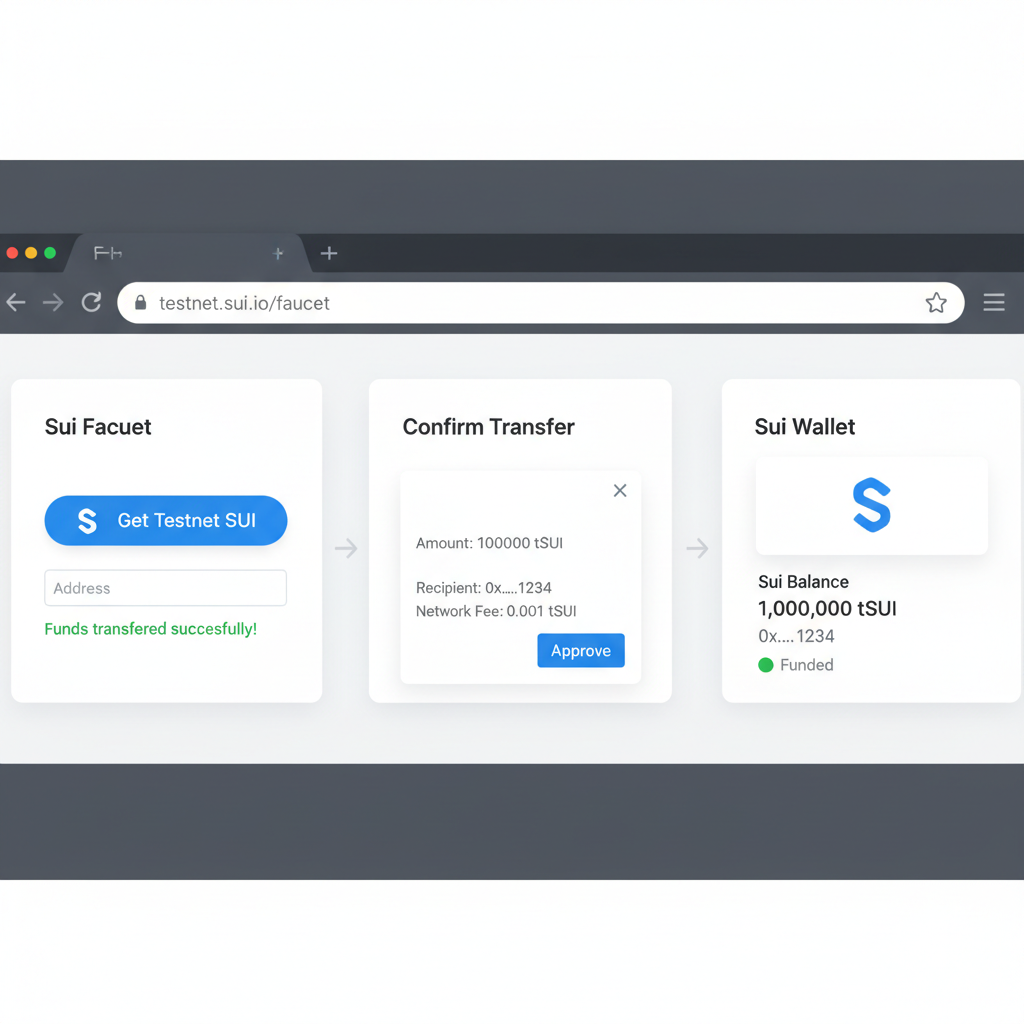
Acquire testnet SUI tokens via the Sui faucet to fund deployments. Initialize a wallet with sui client new-env and switch to testnet. This setup mirrors production, allowing realistic simulations of staking flows where users deposit LP tokens to earn rewards.
Dissecting Yield Farming Primitives in Sui Move
Yield farming on Sui revolves around three pillars: staking assets, accruing rewards, and claiming distributions. Move's linear type system ensures tokens are either held or transferred, eliminating double-spending risks inherent in other languages. A typical farm contract manages a Farm object storing total staked amounts, reward rates, and user positions as shared objects for concurrent access.
Consider reward calculation: use block timestamps for time-weighted accrual, avoiding oracle dependencies initially. Sui's parallel execution shines here, as multiple users stake without contention on non-overlapping objects. Opinion: while Ethereum's gas wars deter farmers, Sui's low fees and sub-second finality make frequent compounding viable, boosting effective APYs.
Security demands precision. Implement access controls via capabilities, where only the farm admin mints rewards. Draw from community tests on fungible tokens, incorporating mint/burn for reward tokens to maintain supply integrity.
Crafting the Staking Module: Your First Sui Move Contract Skeleton
Define core structs in your module. A StakePool holds the reward token balance and configuration, while Position tracks individual stakes with entry timestamps.
StakePool Module Skeleton
To kickstart our DeFi yield farming protocol, we define the foundational StakePool module. This skeleton captures the essential state—tracking total staked amounts and accumulated rewards per share—while incorporating time-based updates via Sui's Clock object for realistic reward accrual.
```move
module yield_farm::stake_pool {

    use std::option;
    use sui::object::{Self, UID};
    use sui::tx_context::{TxContext, tx_context};
    use sui::clock::Clock;
    use sui::balance::{Self, Balance};
    use sui::sui::SUI;
    use sui::transfer;

    /// Core staking pool object managing total stakes and rewards.
    struct StakePool has key {
        id: UID,
        /// Total amount of rewards available in the pool.
        staked_amount: u64,
        /// Accumulated rewards per share (fixed-point scaled).
        rewards_per_share: u64,
        /// Total amount staked by all users.
        total_staked: u64,
    }

    /// Stake tokens into the pool, updating rewards accrual using the clock.
    public entry fun stake(
        pool: &mut StakePool,
        deposit: Balance,
        clock: &Clock
    ) {
        // Update rewards_per_share based on time elapsed since last update.
        // In a full implementation, calculate delta_time = now - last_update_time,
        // then rewards_per_share += (reward_rate * delta_time * SCALE_FACTOR) / total_staked.
        let now = clock::timestamp_ms(clock);
        // Placeholder for reward update logic.

        let amount = balance::value(&deposit);
        pool.total_staked = pool.total_staked + amount;
        // Add to staked_amount if it represents reward pool; adjust as needed.
        pool.staked_amount = pool.staked_amount + (amount / 10); // Simplified reward accrual.

        // In full impl, mint shares to user and track per-user reward_debt.
        transfer::public_transfer(deposit, tx_context::sender(tx_context()));
    }

    /// Harvest accumulated rewards for the caller.
    public entry fun harvest(
        pool: &mut StakePool,
        clock: &Clock
    ) {
        // Update rewards_per_share using current timestamp.
        let now = clock::timestamp_ms(clock);
        // Placeholder: calculate pending_rewards = (user_shares * rewards_per_share) - user_reward_debt.
        // Transfer rewards from staked_amount.

        // In full impl, update user position after harvest.
    }
}
```
This structure provides a solid base for expansion. Next, we'll introduce user-specific positions, precise reward rate calculations, and security measures like access controls to prevent common vulnerabilities in yield farming contracts.
The stake function transfers user LP tokens to the pool, mints a position NFT-like object, and updates global shares. Harvest logic computes pending rewards via (current_share - entry_share) * amount, then resets the position. This move language sui defi example prioritizes composability; integrate with DEX liquidity pools by accepting their LP objects directly.
Test rigorously from the outset. Sui's built-in framework supports unit tests for edge cases like zero stakes or maximum rewards. A nuanced take: in 2026's competitive DeFi arena, farms succeeding on Sui emphasize upgradability proxies, allowing seamless migrations without user friction.
Upgradability proxies represent a forward-thinking layer, where a Proxy struct delegates calls to an implementation module, facilitating upgrades via admin capabilities. This approach, informed by 2026's migration guides, prevents the pitfalls of immutable contracts, like trapped liquidity during protocol tweaks.
Implementing Reward Distribution and Harvesting Logic
Rewards in your sui move yield farming contract accrue dynamically using Sui's Clock object for precise timestamps. The update_rewards function iterates pending accruals before any stake or harvest, ensuring fairness across concurrent transactions. Here's a refined entry point for harvesting, which calculates and transfers rewards atomically.
Harvest Function in the Yield Farm Module
The harvest function enables users to claim their accumulated rewards without removing their liquidity position. It first synchronizes the global rewards per share with the latest timestamp from the Clock object, accounting for elapsed time and the farm's reward rate. It then calculates the user's pending rewards based on their shares and updates the reward debt to reflect the current accrual state. Finally, it transfers the computed reward amount from the farm's vault.
```move
use sui::clock;
use sui::coin;
use sui::transfer;
use sui::tx_context;

const PRECISION: u64 = 1_000_000_000_000;

/// Harvests pending rewards for a user's position.
/// Updates global rewards per share using the clock timestamp,
/// computes and transfers user rewards, and resets the reward debt.
public entry fun harvest(
    farm: &mut Farm,
    position: &mut Position,
    clock: &Clock,
    ctx: &mut TxContext
) {
    // Update rewards per share
    let current_time = clock::timestamp_ms(clock);
    let duration = if (current_time > farm.last_update_time) {
        current_time - farm.last_update_time
    } else {
        0
    };
    let rewards_delta = duration * farm.reward_rate_per_ms;
    if (farm.total_shares > 0) {
        farm.acc_reward_per_share = farm.acc_reward_per_share
            + rewards_delta * PRECISION / farm.total_shares;
    };
    farm.last_update_time = current_time;

    // Compute pending rewards
    let acc_per_share = farm.acc_reward_per_share;
    let pending_rewards = position.shares * acc_per_share / PRECISION - position.reward_debt;

    // Update reward debt (reset for next accrual)
    position.reward_debt = position.shares * acc_per_share / PRECISION;

    // Transfer reward tokens to user
    let reward_coin = coin::take(&mut farm.reward_vault, pending_rewards, ctx);
    transfer::public_transfer(reward_coin, tx_context::sender(ctx));
}
```
In production, incorporate overflow checks (e.g., using `option::none()` on failure or safe arithmetic modules) for the multiplication and division operations to ensure robustness. This design promotes precise, time-proportional reward distribution while maintaining gas efficiency.
This logic leverages Move's borrow-and-transfer semantics, guaranteeing no partial states. Opinion: while simple farms suffice for starters, integrating oracle-fed reward rates unlocks multi-token incentives, aligning with top 2026 strategies like leveraged positions on Sui's scalable base.

Testing Your Contract: From Unit to Integration Suites
Sui's testing harness shines for DeFi primitives. Mock the Clock in unit tests to simulate time jumps, verifying accrual math under varying stake sizes. Integration tests deploy the full package, simulating user flows with funded wallets. Prioritize fuzzing for edge cases, like flash stakes during reward updates, where Move Prover's formal verification adds an unassailable safety net.
A creative edge: script end-to-end scenarios mimicking real-world volatility, such as reward token price swings via treasury drains. This mirrors community best practices, catching reentrancy ghosts before mainnet exposure.
Deploying and Interacting with Your Live Yield Farm
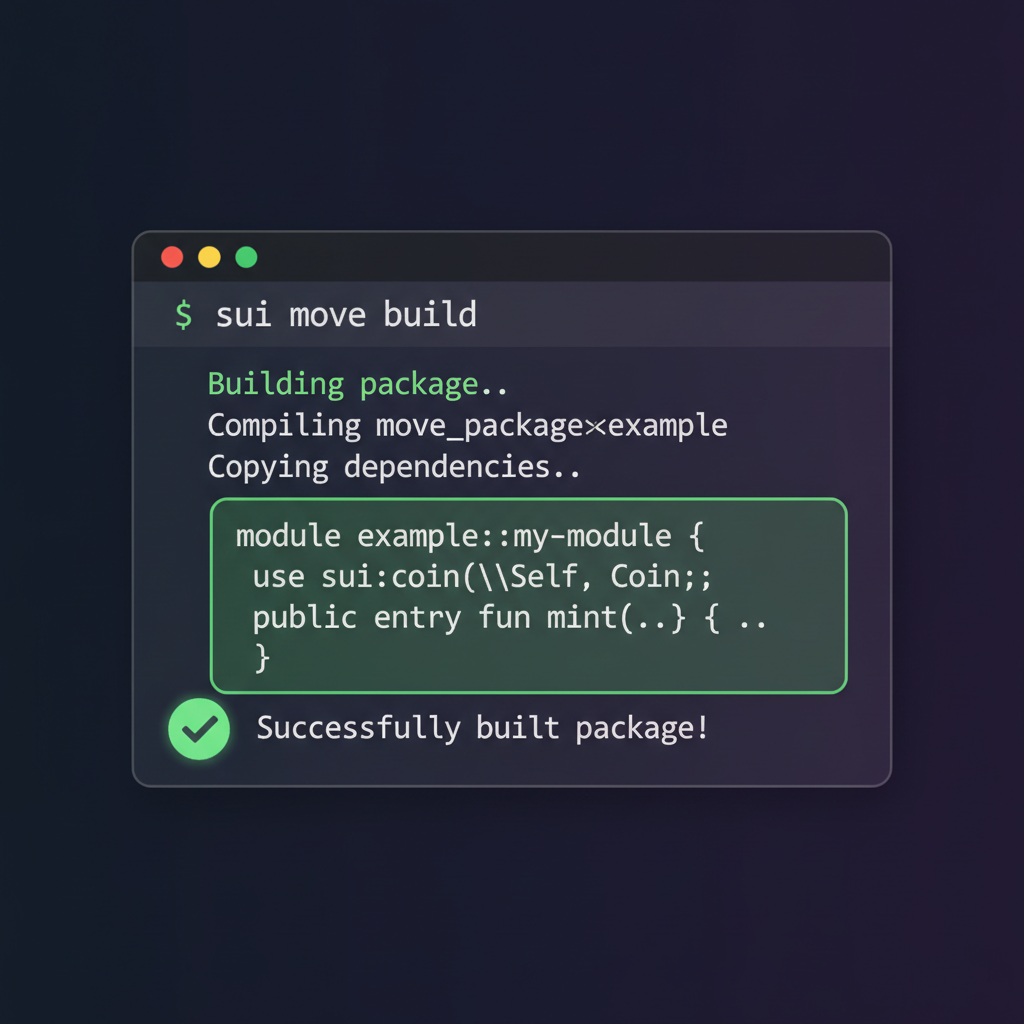
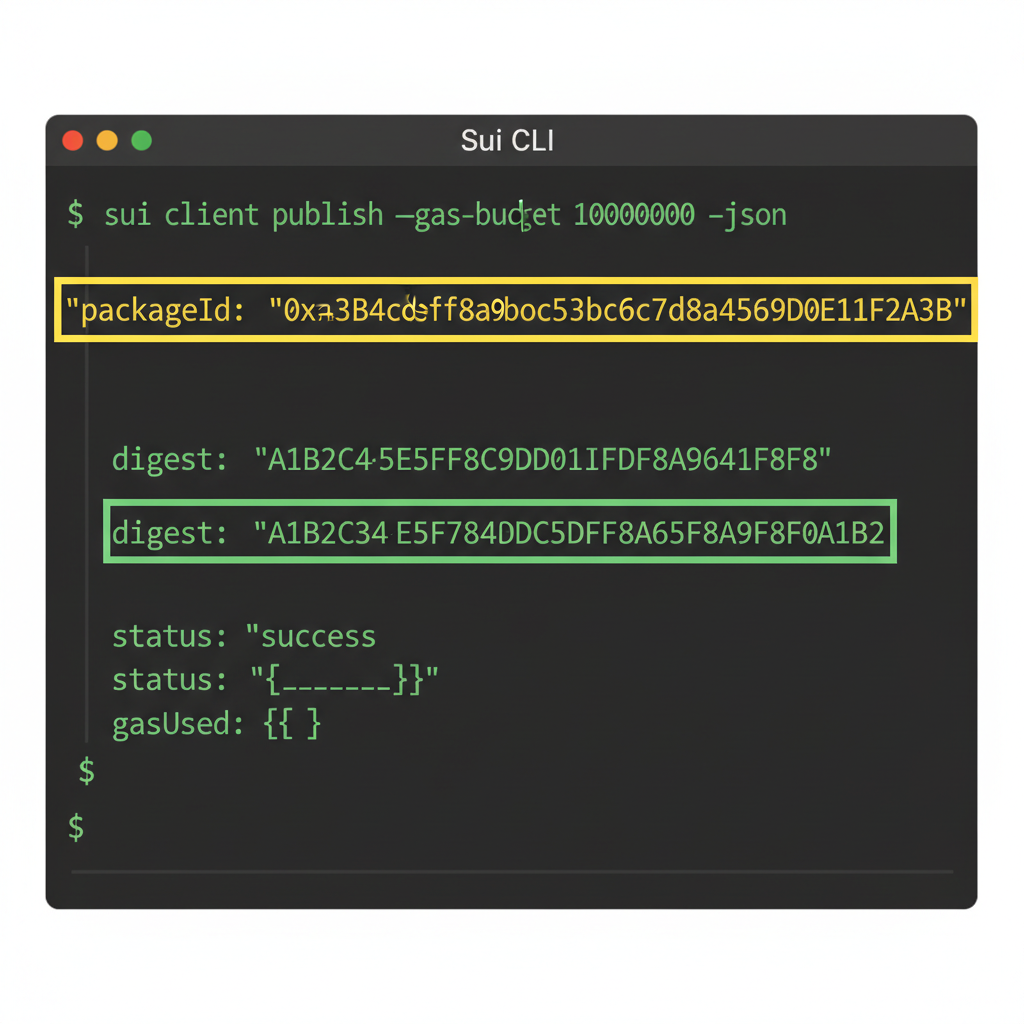
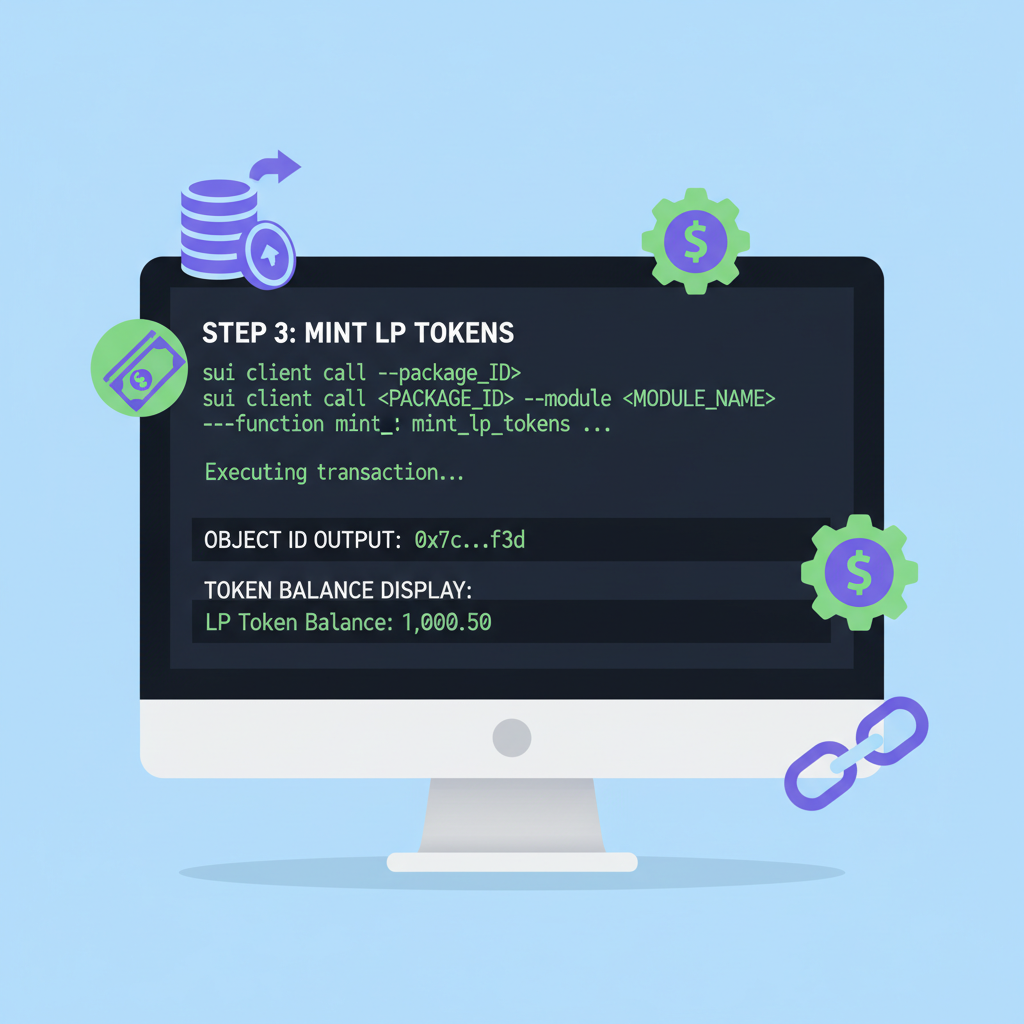
Compile with sui move build, then publish via sui client publish --gas-budget 10000000, capturing the package ID for frontend integration. Interact using move call for stakes and harvests, or craft a TypeScript SDK wrapping RPC calls for dApp polish.
Deploy & Stake Yield Farming Contract on Sui Testnet via CLI
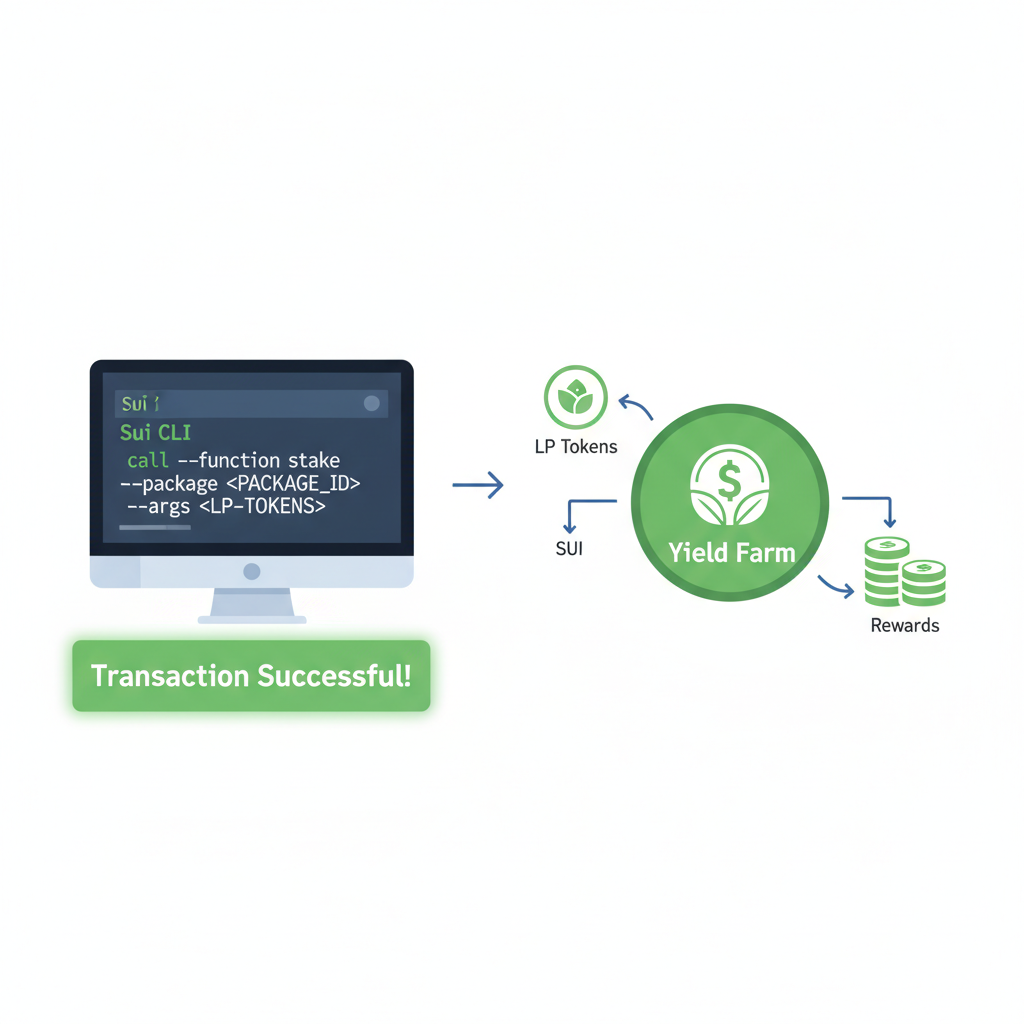
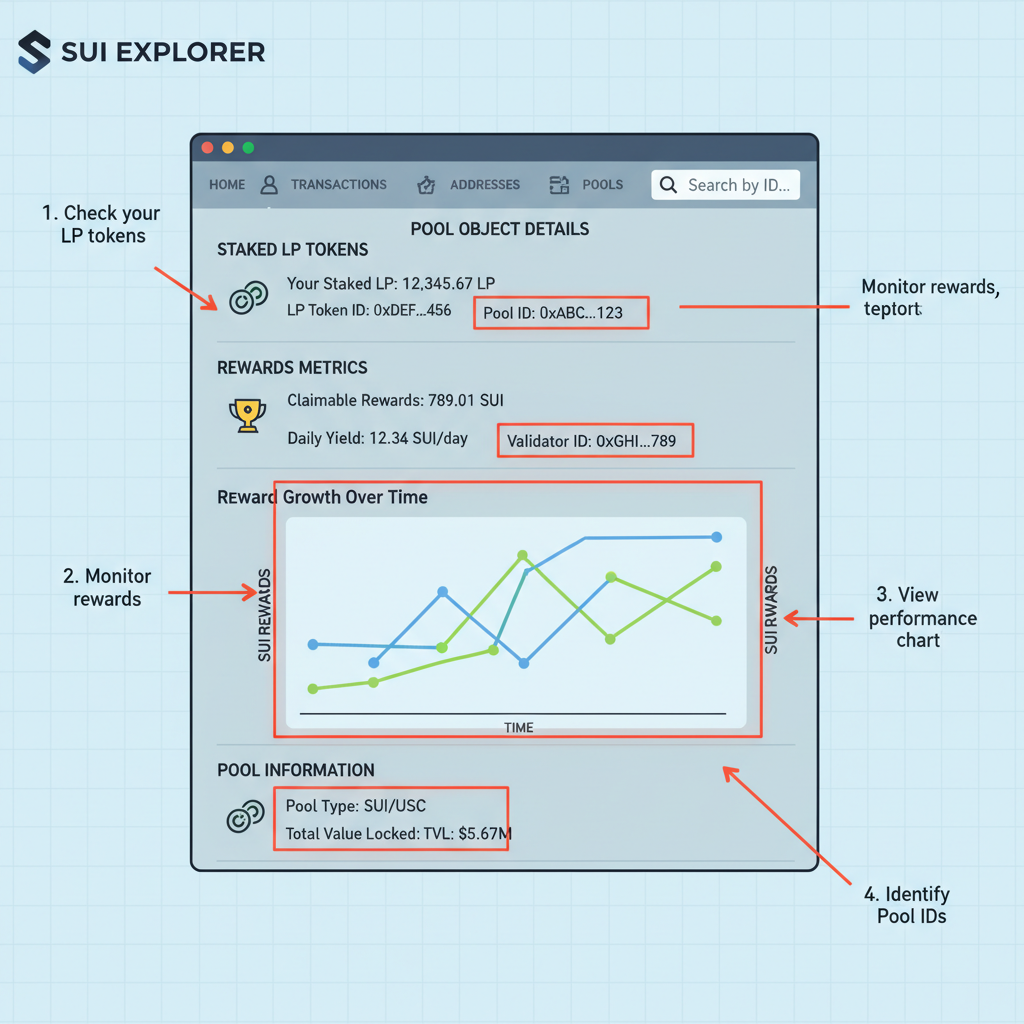
Post-deployment, monitor via Sui Explorer, tweaking reward rates through admin functions. For production, mainnet demands audited code and multi-sig governance, reflecting Sui's DeFi maturation.
Enhance composability by accepting LP tokens from Sui DEXes, enabling one-stop yield optimization. Liquid staking integrations, like wrapping xSUI, amplify capital efficiency; users stake derivatives without opportunity costs, a hallmark of 2026's fluid protocols.
Best practices evolve with the ecosystem: embed pause mechanisms for emergencies, conduct formal audits via tools like Move Prover, and plan proxy upgrades meticulously. Communicate migrations transparently to retain farmer trust, avoiding the fund-lock debacles plaguing lesser chains.
Sui's parallel execution and object model position your deploy sui move smart contract defi for massive scale, outpacing congested rivals. Developers mastering these elements not only launch viable farms but pioneer the next wave of move language sui defi example, where speed meets security in perfect balance.




No comments yet. Be the first to share your thoughts!