

Sui Move Tutorial: Building Liquid Staking Smart Contracts for Sui LST Protocols
As Sui’s price holds steady at $0.9167, down just 0.0270% in the last 24 hours with a range between $0.9109 and $0.9590, the blockchain’s ecosystem continues to mature. Developers are drawn to its high throughput and Move language for crafting secure DeFi primitives like liquid staking tokens, or LSTs. These protocols let users stake SUI while keeping liquidity through derivative tokens, capturing rewards without lockups. In this Sui Move tutorial, we delve into building such contracts, inspired by real-world examples like Volo’s liquid staking repositories.

Deposit Function: LST Minting and Validator Delegation
In Volo’s liquid staking implementation, the deposit function serves as the entry point for users to participate in staking without locking their assets. It receives SUI tokens, carefully mints an equivalent amount of LST shares—reflecting a conservative 1:1 ratio for simplicity—and sets the stage for delegation to trusted validators, ensuring both liquidity and yield generation.
```move
/// Simplified deposit function from Volo's liquid staking repository.
/// Demonstrates SUI deposit, LST minting, and delegation preparation.

module volo::lst {
    use sui::coin::{Self, Coin, TreasuryCap};
    use sui::sui::SUI;
    use sui::balance::{Self, Balance};
    use sui::tx_context::{Self, TxContext};
    use sui::transfer;
    use sui::object::UID;
    use sui::staking_pool;

    struct LST has drop {}

    struct LSTCap has key {
        id: UID,
        cap: TreasuryCap,
    }

    struct Pool has key {
        id: UID,
        sui: Balance,
    }

    /// Deposit SUI, mint LST, and prepare delegation to validators.
    public entry fun deposit(
        pool: &mut Pool,
        cap: &mut LSTCap,
        deposit: Coin,
        validator: address,
        ctx: &mut TxContext
    ) {
        let amount = coin::value(&deposit);
        let bal = coin::into_balance(deposit);
        balance::join(&mut pool.sui, bal);

        // Mint LST tokens 1:1 (in practice, based on exchange rate)
        let lst = coin::mint(&mut cap.cap, amount, ctx);
        transfer::public_transfer(lst, tx_context::sender(ctx));

        // Delegate to validator (simplified; real impl uses staking_pool::add_stake)
        // staking_pool::request_add_stake(&mut pool.stake_object, amount, validator);
    }
}
```
This example encapsulates the thoughtful balance between user accessibility and protocol security, narrating the journey from raw SUI to productive LST holdings in a manner that underscores Sui’s elegant Move paradigm.
Liquid staking transforms traditional staking. Providers pool user deposits, delegate to validators, and issue LSTs as receipts. Holders earn staking yields plus potential appreciation, all while trading or using LSTs in DeFi. On Sui, this shines due to object-centric design, enabling seamless asset management without global storage pitfalls common in other chains.
Why Build Sui LST Smart Contracts in Move
Move’s resource-oriented model enforces safety, crucial for staking where funds must remain secure amid validator risks. Unlike imperative languages, Move prevents double-spends natively, aligning perfectly with Sui LST protocols. Projects like Volo’s vaults and Interest LST demonstrate this: users stake to preferred validators, mint LSTs, and unstake fluidly. With SpringSui’s permissionless standard from Suilend, over 200 LSTs emerged by mid-2025, backed by Sui Foundation’s 25 million SUI commitment for liquidity.

Conservatively, approach LST development with caution. Staking yields fluctuate with network participation; at current levels around Sui’s $0.9167 price, protocols must handle depegging risks via instant unstaking features. Our tutorial builds a foundational Sui LST smart contract, emphasizing modularity for Sui Move liquid staking.
Essential Move Primitives for Staking Pools
Begin with Sui’s staking primitives. The staking_pool module underpins delegation, but LSTs wrap it in custom logic. Define a Vault object holding staked SUI and minted LSTs. Track shares via total supply and user balances, ensuring 1: 1 backing initially, adjusted by rewards.
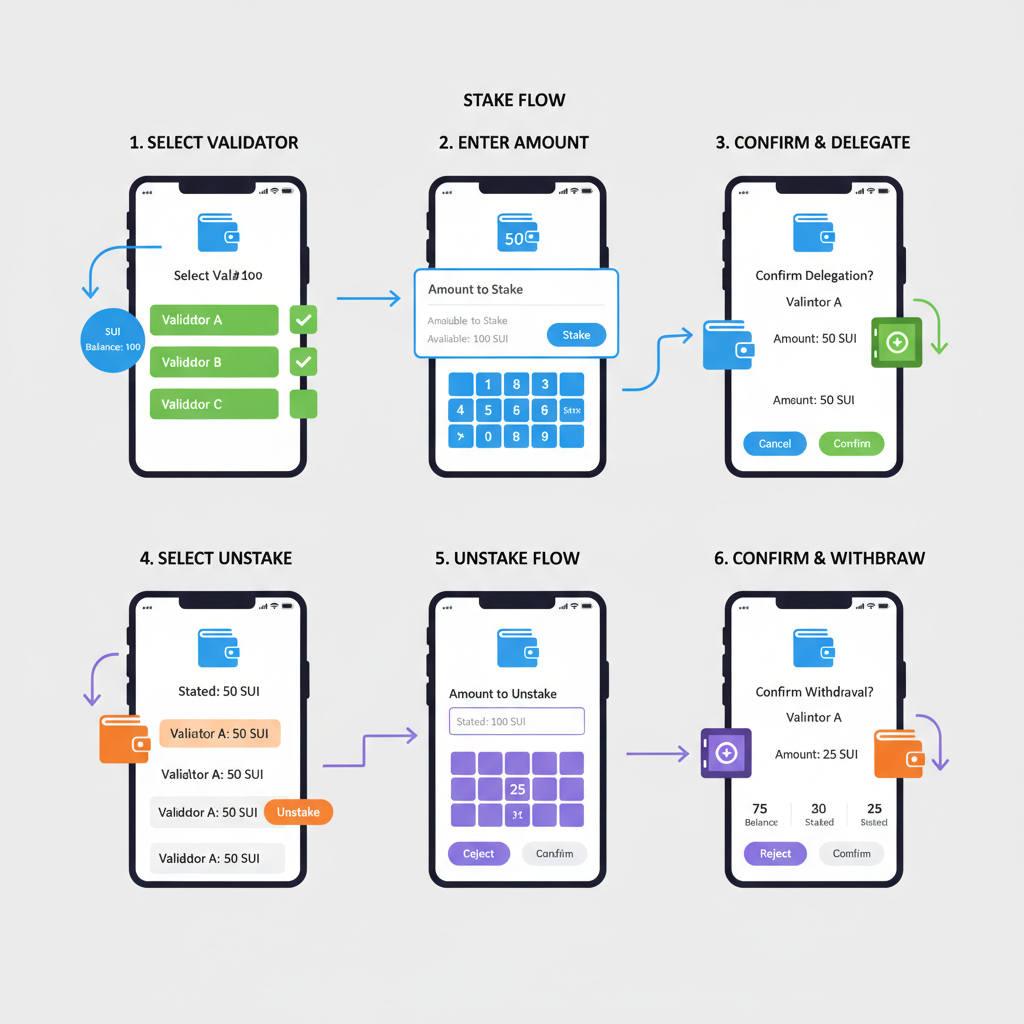
This structure, drawn from Volo-inspired repos, uses Sui’s dynamic fields for scalable user accounting. Entries like stake transfer SUI to the vault, mint proportional LSTs, and delegate via sui: : staking_pool: : delegate. Unstaking reverses: burn LSTs, request withdrawals, claim after epochs.
Implementing the Stake Entry Point
Craft the stake function thoughtfully. Accept Coin and lt;SUI and gt;, compute shares based on current exchange rate, mint LSTs, and delegate. Use coin: : mint for LST issuance post-capability checks. Here’s the narrative flow: user approves SUI spend, vault accretes value from rewards, new stakes get fair shares.
Handle edge cases conservatively. Minimum stake thresholds prevent dust attacks; pause mechanisms during upgrades draw from audited patterns in GitHub repos like Sui-Volo. Integrate with Sui’s clock for precise reward accrual, querying validator APRs dynamically.
As we progress, test on Sui Testnet. Install Sui binaries, generate a deployer wallet, and publish modules per Volo’s setup guide. This ensures your Move language LST tutorial yields production-ready Sui staking module code.
Edge cases like zero balances or insufficient liquidity demand robust assertions. Move’s linear types shine here, consuming inputs immutably to prevent reentrancy, a conservative choice for Sui LST smart contracts.
Unstaking Mechanics and Reward Claims
Unstaking mirrors staking but introduces epoch delays inherent to Sui’s delegation model. Users burn LSTs proportional to their shares, queue withdrawal requests, and claim SUI post-maturing period. Track pending withdrawals in a dynamic field table keyed by user address, accruing rewards pro-rata until claim. This setup, echoing Interest LST’s dual mint options, lets holders choose validators for optimized yields.
Implementing the Unstake Function
When users wish to unstake their LST tokens, the process begins with a careful calculation of any rewards they have earned during the staking period. This function thoughtfully handles the burning of LST, ensuring the supply remains accurate, while initiating a delegation unstake request for the principal plus rewards. Such a design respects the unbonding periods inherent in delegated staking, providing a conservative approach to liquidity provision.
```move
/// Module for LST Vault operations

/// Unstake LST tokens from the vault.
/// Burns the provided LST amount, calculates accrued rewards,
/// and submits an unstake request to the underlying delegation.
public entry fun unstake(
    vault: &mut LSTVault,
    lst_amount: u64,
    ctx: &mut TxContext
) {
    assert!(lst_amount > 0, EZeroAmount);

    let clock = clock::share_object();
    let current_time = clock::timestamp_ms(clock);

    // Calculate rewards based on time elapsed and vault's reward rate
    let rewards = rewards::calculate_accrued_rewards(
        &vault.rewards_info,
        lst_amount,
        vault.last_reward_update,
        current_time
    );

    // Update vault's last reward timestamp
    vault.last_reward_update = current_time;

    // Burn LST tokens
    coin::burn(&mut vault.lst_treasury, lst_amount);

    // Request unstake from delegation pool (principal + rewards)
    let total_unstake = lst_amount + rewards;
    pool::request_unstake(&mut vault.delegation_pool, total_unstake);

    // Emit event for tracking
    event::emit(UnstakeEvent {
        account: tx_context::sender(ctx),
        lst_amount,
        rewards,
        total_unstake,
        request_id: object::new_uid(ctx),
    });
}

/// Event emitted on unstake
struct UnstakeEvent has copy, drop {
    account: address,
    lst_amount: u64,
    rewards: u64,
    total_unstake: u64,
    request_id: UID,
}
```
This unstake mechanism forms a crucial part of the LST protocol’s lifecycle, bridging the gap between liquid tokens and the underlying staked assets. By separating reward calculation from immediate withdrawal, it maintains protocol solvency and aligns incentives thoughtfully across participants. In practice, users would later claim their matured unstake requests once the delegation unbonding completes.
Rewards compound automatically via oracle updates or on-chain validator queries, adjusting the share price. Conservatively, cap unstake amounts during high redemption pressure to maintain peg stability, especially as Sui trades at $0.9167 amid steady network growth.
Deployment Workflow for Production LSTs
With core functions sketched, assemble the full module. Publish the package using Sui CLI, initializing the vault with a shared object ID for public access. Admin capabilities control pauses and upgrades, vested in a multisig for decentralization. Testnet deployment reveals gas efficiencies; Sui’s parallel execution keeps costs low even at scale.
Deploy Sui Liquid Staking Contract: Thoughtful Step-by-Step Guide
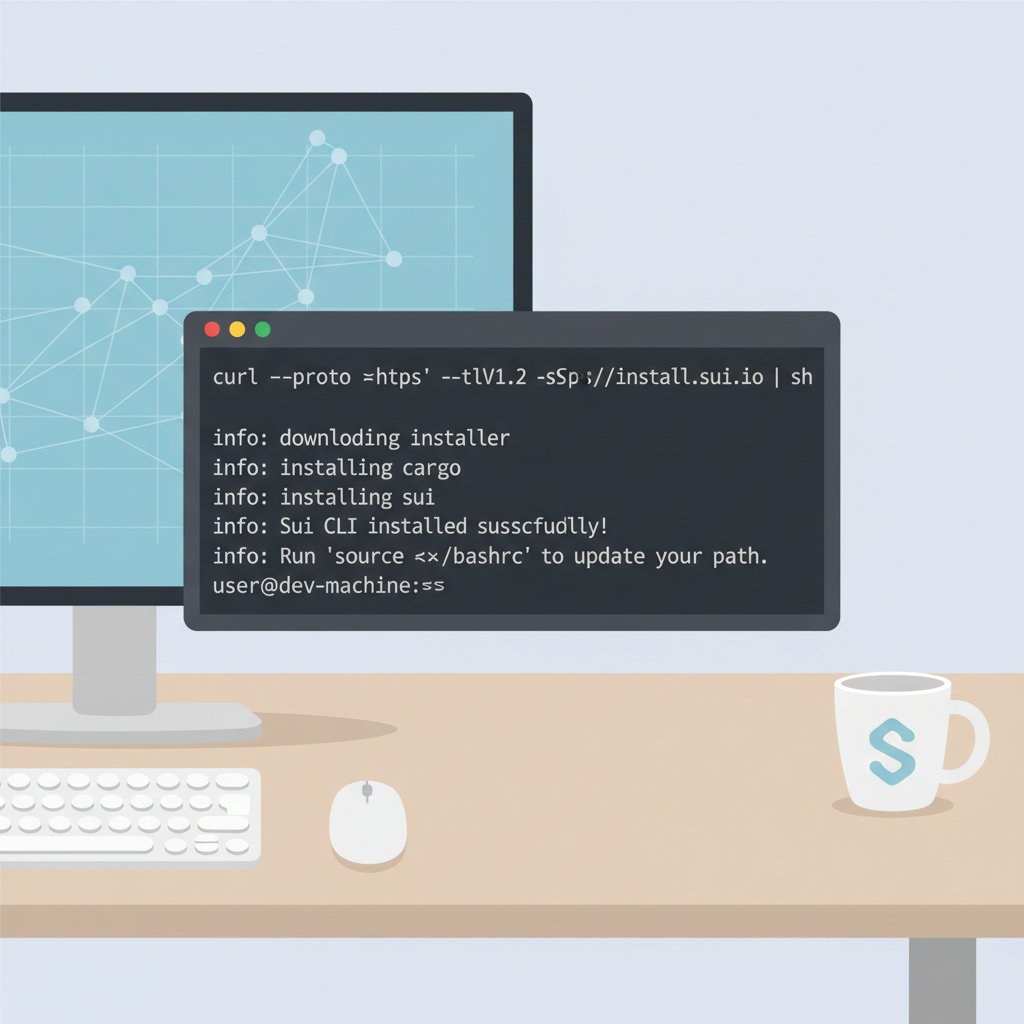
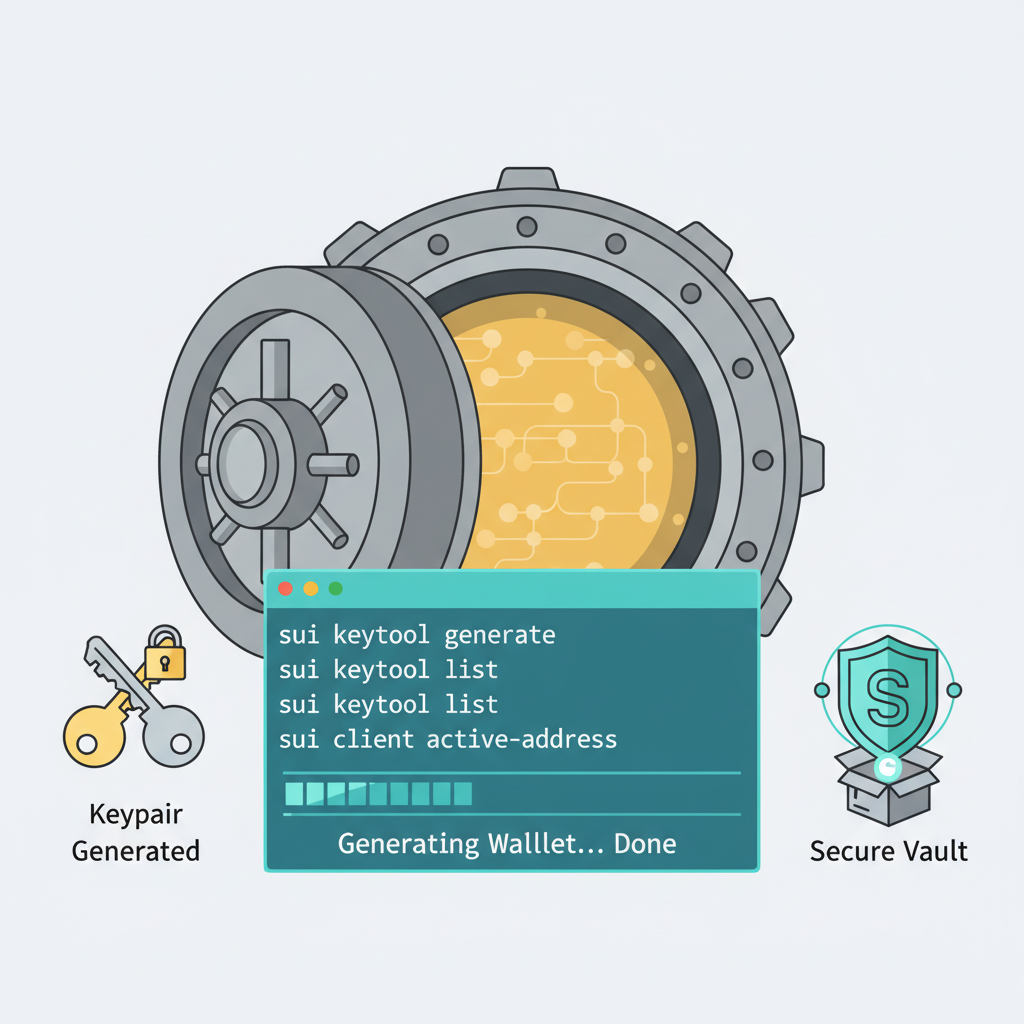

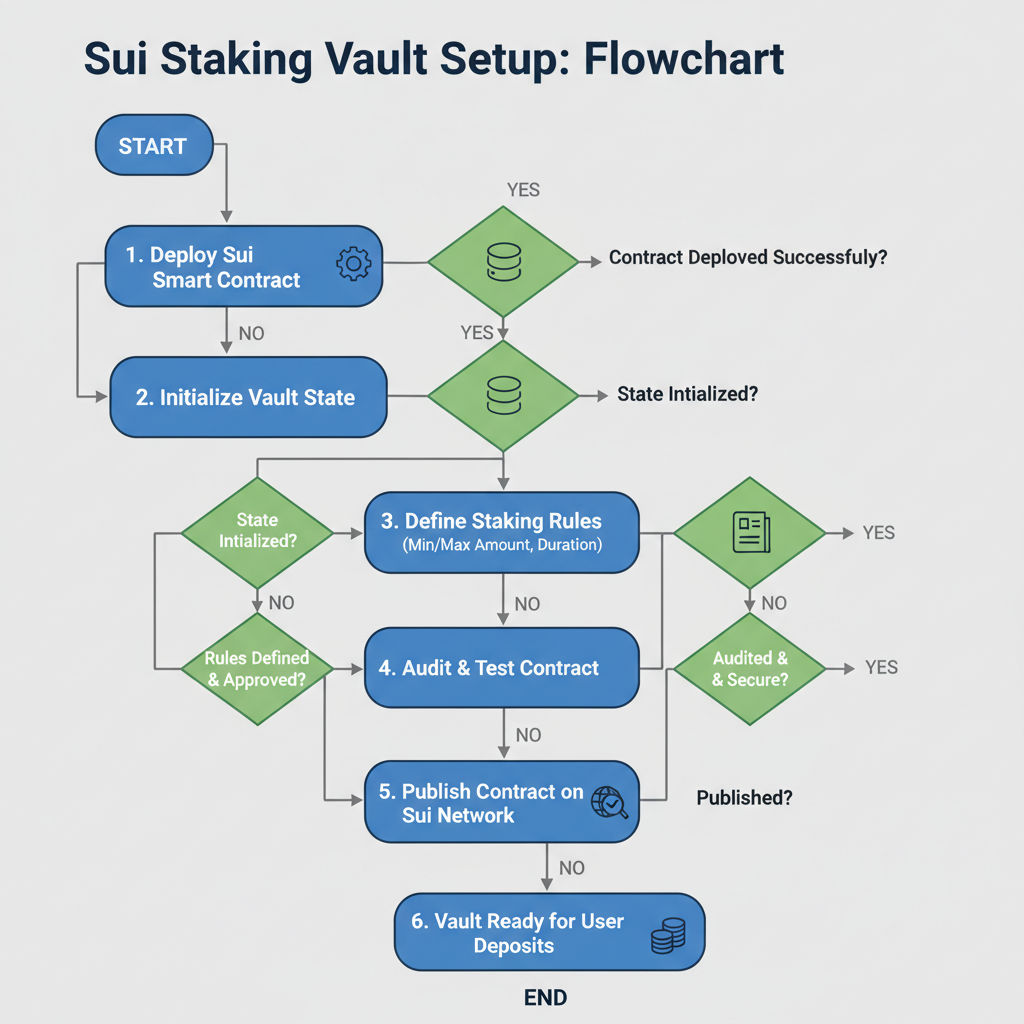
This process aligns with Volo’s GitHub instructions: generate deployer wallet, deploy, setup package. Once live, monitor via Sui Explorer, tweaking rates based on real APRs from top validators.
Security Audits and Best Practices
No Sui Move liquid staking tutorial omits security. Audit for overflow in share math, validate coin types strictly, and use Sui’s object versioning to prevent replays. Draw from SpringSui’s instant unstaking to mitigate depegging; at over 200 LSTs by 2025, the ecosystem stresses battle-tested patterns. Implement circuit breakers for oracle failures, ensuring funds remain staked safely.
Conservative developers prioritize simulations over mainnet rushes. Use Sui’s Move Prover for formal verification, catching invariants like total LST supply never exceeding backed SUI. Integrate with DeFi composability: LSTs as collateral in lending protocols, amplifying utility without added risks.
In practice, bootstrap liquidity by seeding the vault with foundation grants, akin to Sui’s 25 million SUI pledge. At $0.9167, staking remains attractive for yields outpacing volatility, but always model worst-case validator slashing.
| Component | Risk Mitigation |
|---|---|
| Share Calculation | High-precision fixed-point math |
| Unstaking Queue | Epoch-aware claims |
| Admin Controls | Multisig and Timelocks |
Building Sui staking module code demands patience, much like long-term positions in volatile assets. Protocols succeeding here, from Volo vaults to permissionless SpringSui, reward thoroughness with sustainable TVL growth. Experiment on testnet, iterate, and contribute to open repos; the Move community thrives on shared primitives for build Sui DeFi LST innovation.
As Sui’s throughput scales, LSTs will anchor DeFi hubs, blending staking security with liquidity. Your custom vault positions you at this nexus, capturing value steadily amid the blockchain’s measured ascent.