

Building Secure DeFi Smart Contracts on Sui with OpenZeppelin Move Library Code Examples

As Sui’s native token trades at $0.9533, reflecting a modest 24-hour gain of and $0.0475, the blockchain’s ecosystem continues to mature with tools that prioritize security over speculation. Developers building DeFi applications now have access to OpenZeppelin’s battle-tested Move library, a development that echoes the prudence of long-term investment strategies: favor proven foundations rather than chasing fleeting trends.


This library, purpose-built for Sui’s Move language, delivers audited primitives for everything from access control to mathematical operations essential for lending protocols and decentralized exchanges. In a space where exploits have drained billions, adopting such standards feels less like an option and more like a necessity, especially as integrations like Tread. fi with Aftermath Finance and DeepBook highlight Sui’s growing DeFi infrastructure.
OpenZeppelin’s Arrival Signals Maturity in Sui DeFi
Sui has always stood apart with its object-centric model and parallel execution, but the integration of OpenZeppelin’s library marks a pivotal shift. Known for securing over $35 trillion in onchain value across EVM chains, OpenZeppelin now adapts its expertise to Move, offering reusable contracts that mitigate common vulnerabilities. Think of it as bringing institutional-grade safeguards to a frontier market; conservative builders will appreciate how this reduces the reinvent-the-wheel risks inherent in custom code.
The library’s GitHub repository brims with modules tailored for Sui, from safe math to role-based permissions. This isn’t hype-driven; it’s a deliberate response to developer feedback, coinciding with ecosystem expansions like DeepBook’s central limit order book, which empowers efficient trading without the gas wars of older chains. With Sui at $0.9533, such advancements bolster confidence in sustainable growth over pump-and-dump cycles.
Core Primitives for Robust DeFi Mathematics
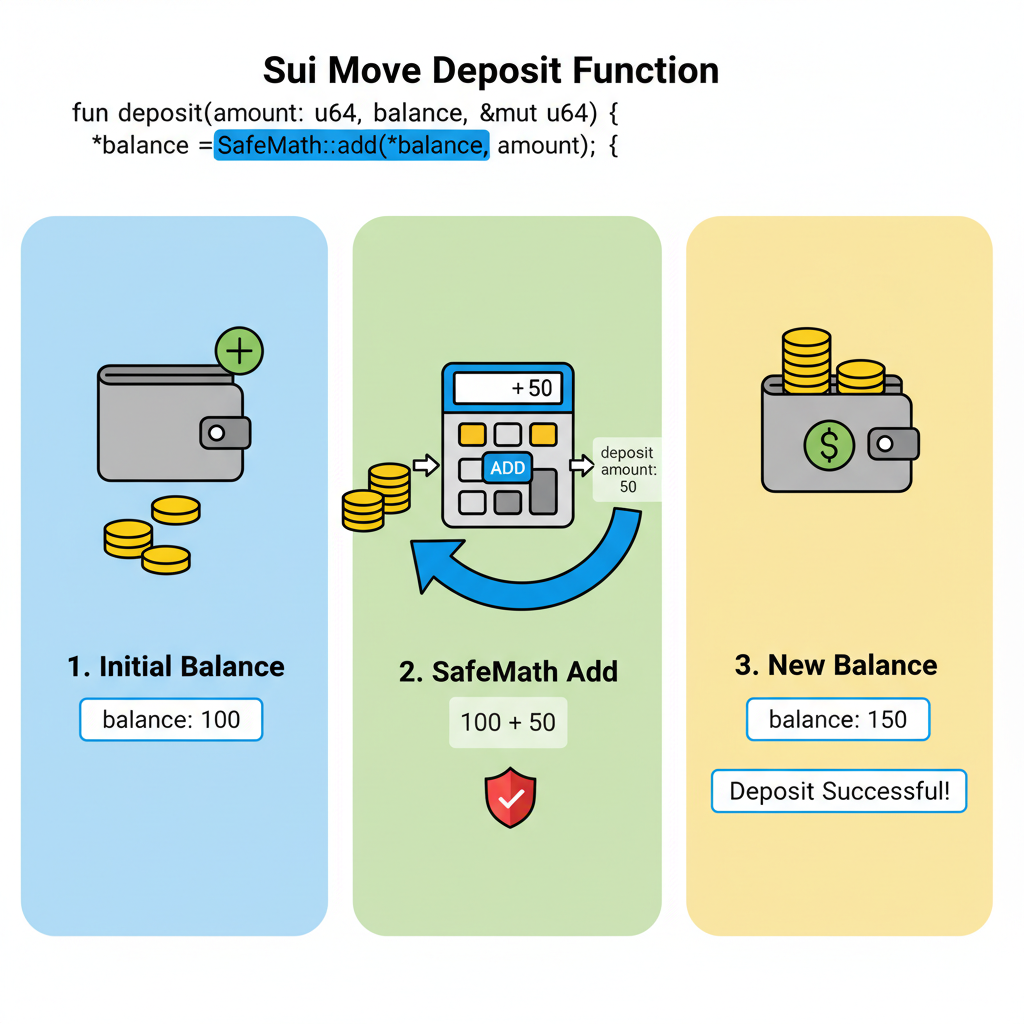
At the heart of secure DeFi lies precise arithmetic, where overflows or underflows can cascade into catastrophic losses. OpenZeppelin’s Move DeFi library introduces SafeMath modules, ensuring operations like addition and multiplication revert safely on errors. This conservative approach aligns with my view that in blockchain, as in bond investing, precision in calculations underpins dividend-like reliability.
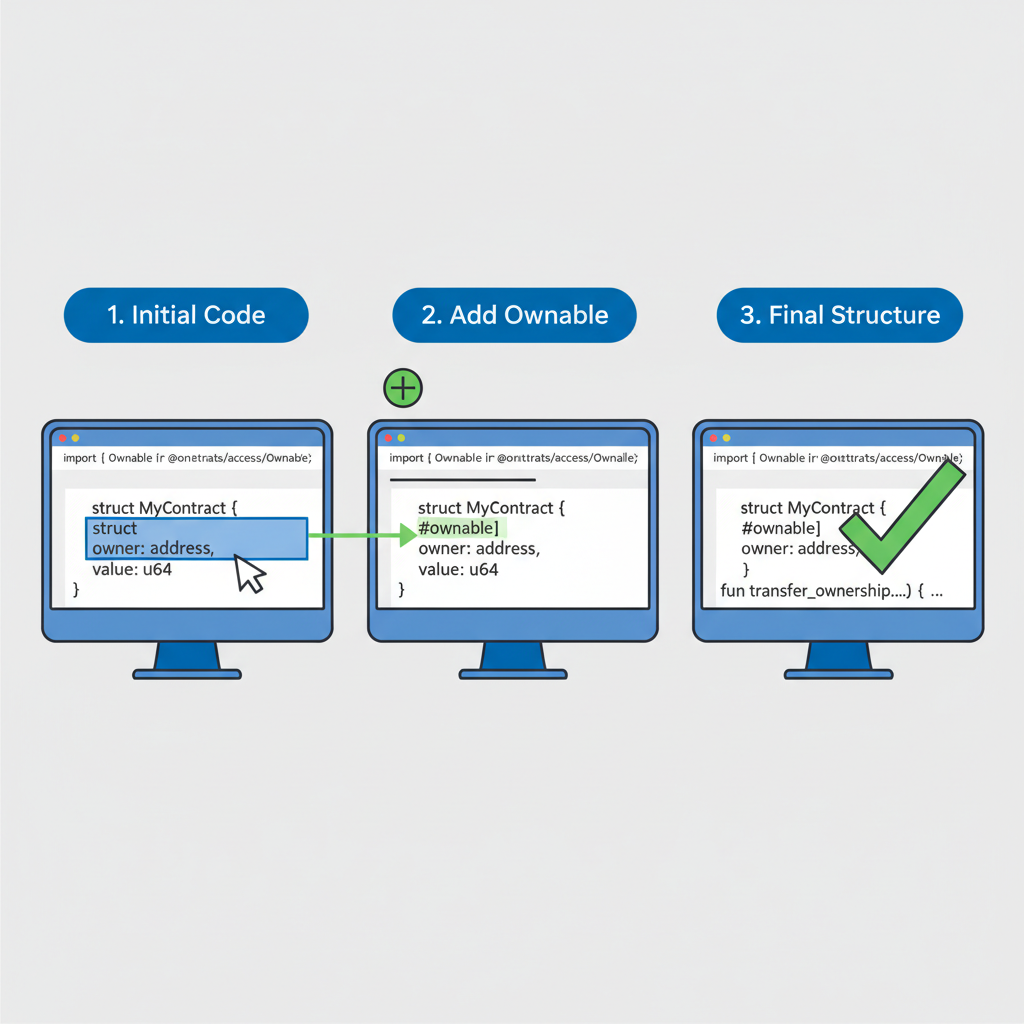
For instance, when implementing token transfers in a lending pool, developers can leverage these primitives to prevent manipulation. Combined with access control patterns, such as Ownable and AccessControl, contracts gain layered defenses. Sui’s parallel processing amplifies this: secure building blocks scale without introducing bottlenecks, a narrative far more compelling than raw throughput claims.
Setting Up Your Sui Environment with OpenZeppelin
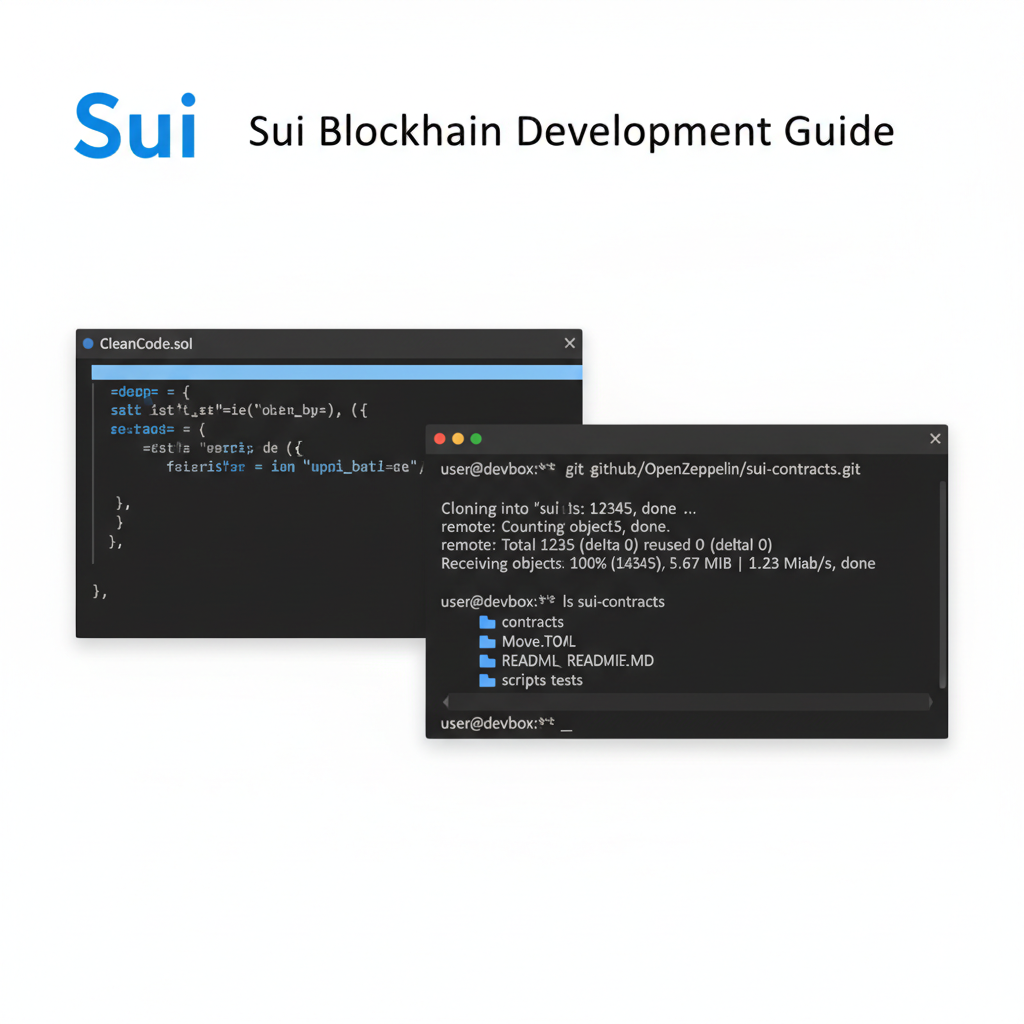
Begin with the Sui CLI and Move analyzer installed, then clone the OpenZeppelin repository. Initialize a new package via sui move new my_defi_app, and import the library modules into your Move. toml dependencies. This setup, straightforward yet methodical, mirrors the discipline of portfolio rebalancing: methodical steps yield compounding security.
Consider a simple vault contract. Define capabilities for deposits and withdrawals, enforcing checks via OpenZeppelin’s modifiers. Here’s how it starts shaping up:
- Declare shared objects for pool states, leveraging Sui’s dynamic fields.
- Integrate SafeMath for balance updates.
- Apply Pausable for emergency halts, a feature proven in high-stakes protocols.
This foundation allows experimentation with DeepBook liquidity while maintaining audit-grade integrity. As Sui holds steady at $0.9533, with a 24-hour high of $0.9693, the timing feels right for developers to embed these libraries, crafting DeFi that endures market cycles.
Next, we’ll dive into a full code walkthrough for a lending module, but first, grasp why these primitives matter in practice.
These primitives shine brightest when applied to real-world scenarios, like a lending protocol where interest accrues predictably and withdrawals remain solvent. Without them, a single rounding error could erode trust, much as overlooked credit risks unravel bond portfolios over time. OpenZeppelin’s library enforces invariants that keep DeFi mechanisms humming reliably, even amid volatility.
Crafting a Lending Module: Code Walkthrough
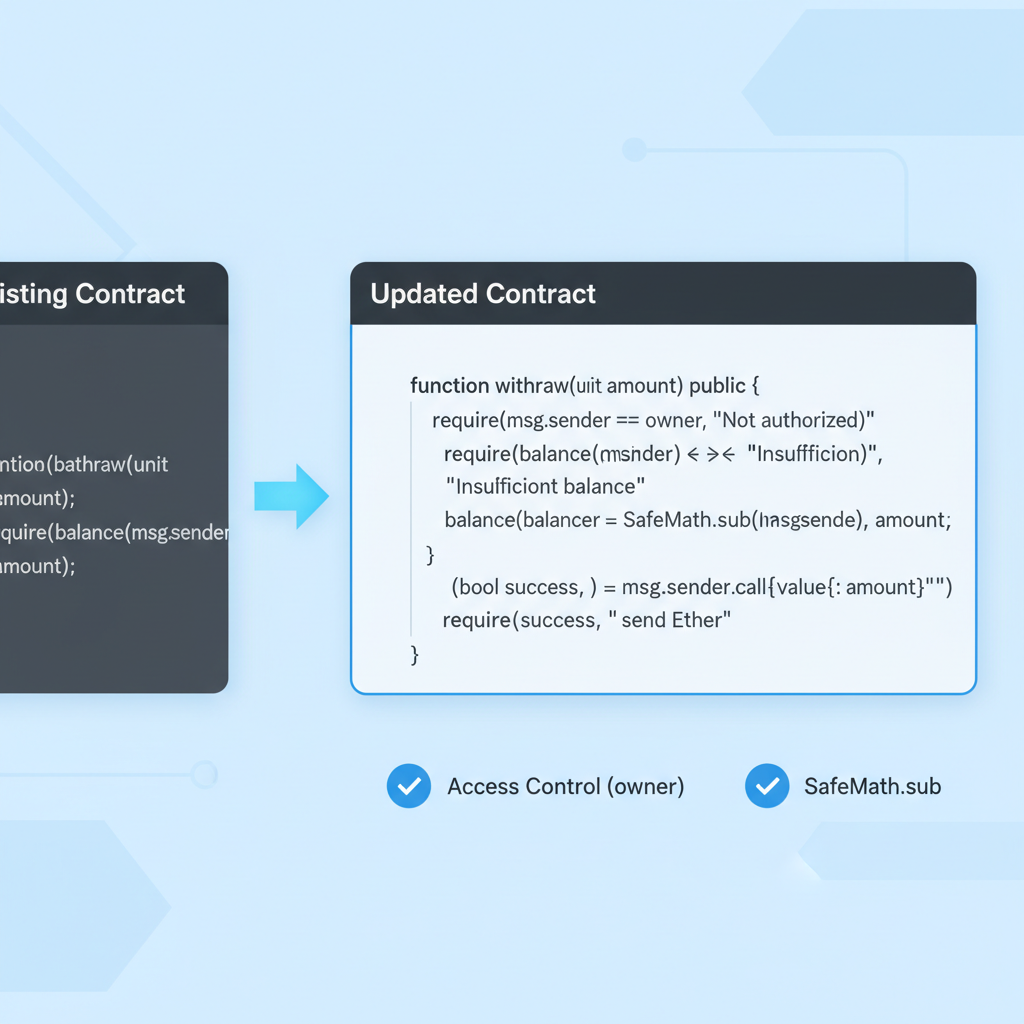
Let’s construct a basic lending module, drawing directly from OpenZeppelin’s Sui-adapted contracts. This example assumes familiarity with Sui’s object model, where lenders deposit into shared pools represented as dynamic objects. We’ll incorporate SafeMath for balance adjustments and AccessControl for admin roles, creating a contract resilient to front-running or flash loan exploits.
Building a Secure Lending Contract on Sui with OpenZeppelin Move
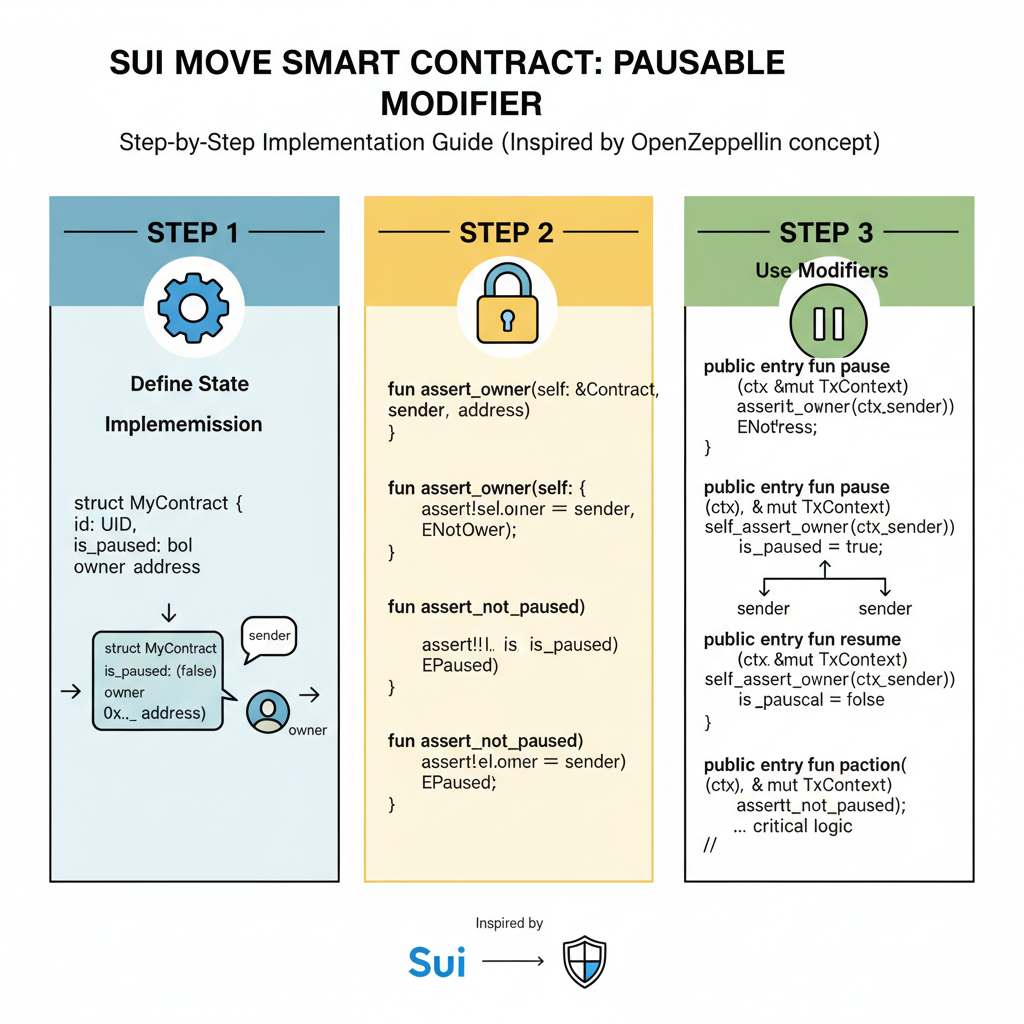
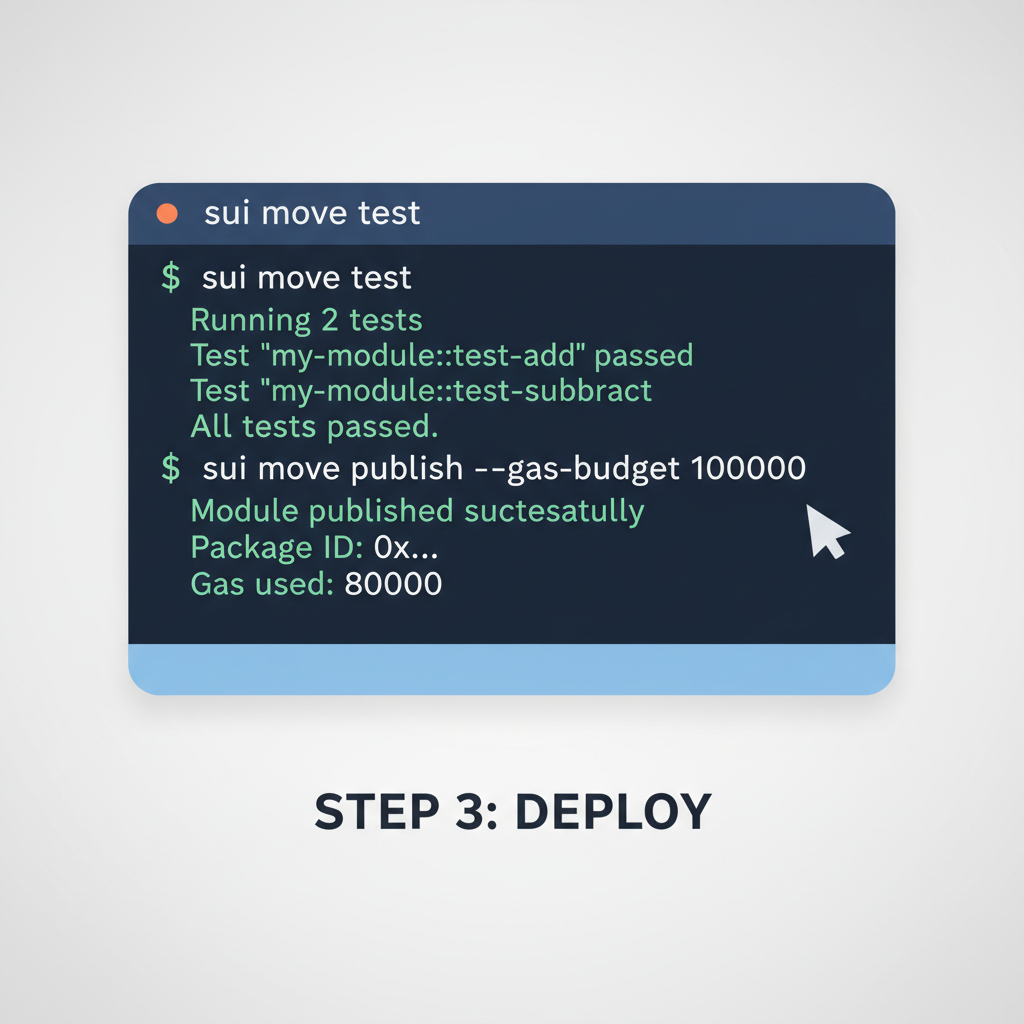
Once deployed, test on Sui Testnet. Simulate deposits at varying rates, verifying that accruals use precise fixed-point math from the library. This methodical build process uncovers edge cases early, preserving capital in ways that speculative coding rarely does.
Access Control and Emergency Safeguards
Beyond math, governance demands rigor. OpenZeppelin’s AccessControl lets you define roles like PAUSER or LENDER, with granular permissions enforced at the module level. Pair this with Pausable, and you gain an off-switch for threats, activated only by authorized keys. In practice, this has saved protocols from millions in losses, a conservative hedge akin to stop-loss orders in commodities trading.
For DeFi builders eyeing advanced features, extend to Timelock for delayed executions, preventing rash decisions. These patterns, audited across chains, translate fluidly to Move’s linear types, ensuring assets can’t duplicate or vanish unexpectedly. As Sui trades at $0.9533, up $0.0475 over 24 hours with a high of $0.9693, this tooling supports protocols that weather dips without drama.
DeepBook’s CLOB model amplifies these benefits, offering deep liquidity for leveraged positions. Developers integrating OpenZeppelin can build DEX wrappers or yield optimizers, confident in battle-tested defenses. Tutorials from Dacade highlight similar DEX contracts, but layering OpenZeppelin elevates them to production-ready standards.
Testing and Deployment Best Practices
Fuzz testing with Sui’s tools reveals weaknesses before mainnet. Write unit tests asserting SafeMath reverts on overflows, then integration tests simulating multi-user borrows. Deploy via Sui CLI, publishing with gas budgets calibrated for parallel txs. Monitor post-launch with object queries, ready to pause if anomalies arise.
Comparison of Key OpenZeppelin Modules for Sui DeFi: SafeMath, AccessControl, Pausable, Ownable
| Module | Key Features | Primary Use Cases |
|---|---|---|
| SafeMath | • Safe add, subtract, multiply, divide operations • Prevents integer overflows/underflows in Move |
• Token balances and transfers • Liquidity provision calculations • Yield farming rewards in Sui DEXs like DeepBook integrations |
| AccessControl | • Role-based permissions (e.g., admin, minter roles) • Granular access management |
• Governance modules • Multi-admin DeFi protocols • Permissioned trading on Sui platforms |
| Pausable | • Pause/unpause contract execution • Emergency stop functionality |
• Exploit response • Maintenance during high volatility • Safety in Sui DeFi lending apps |
| Ownable | • Single owner with privileged actions • Ownership transfer capability |
• Admin-controlled upgrades • Simple ownership in starter DeFi contracts • Proxy patterns on Sui |
This disciplined workflow minimizes exploits, fostering protocols that compound value steadily. In Sui’s ecosystem, where Aftermath and DeepBook integrations signal momentum, OpenZeppelin’s library positions builders for enduring success. With $0.9533 reflecting steady ascent, the focus shifts from survival to scalable innovation, rewarding those who prioritize secure foundations.

Featuring @EmberProtocol, @AftermathFi, @zofaiperps, @Suuuiplash, @0xbeepit, @ferra_protocol https://t.co/Wqz6vUwsOl

Best traders are already joining ZO x @SlushWallet Trading Competition.
Campaign period: March 17th – March 30th
Rewards:
• Top 100 by trading volume: $10,000
• 1,000 winners via lottery: $10,000
How to join:
• Connect your wallet to verify with Slush Wallet https://t.co/tvxvwNY9Q2

Suuuiplash Heroes Private and Public Mint now complete!
So, what’s next:
• Remaining NFTs will be distributed to: Genesis holders, STBL raffle winners and reserve
• Supply capped at 1,600
• Unsold NFTs won’t be minted
Airdrop is expected on March 27. Stay https://t.co/JjnoT22iYT

AI agents on Beep just leveled up.
The team has rolled out Agent Trader R2, allowing users to run your own AI trading strategy with your capital on @SuiNetwork.
Getting started is simple:
• Step 1. Pick a preset strategy
• Step 2. Choose your AI model
• Step 3. https://t.co/m051JRzAyd

Ferra BountyDrop on @GateDEX is live!
100 users will be randomly selected to share 150,000 Points.
Simply complete simple tasks:
• Hold assets worth at least 10 USDT (or equivalent) in Gate DEX across the Sui chain.
• Follow @GateDEX & @ferra_protocol
• https://t.co/b0tA9lpb49