
What is move-based programming 2026
Move is a resource-oriented programming language designed for safety and scalability in blockchain environments. Instead of treating digital assets as simple data that can be copied or discarded, Move treats them as unique resources. This fundamental shift prevents common smart contract bugs like accidental duplication or value loss.
For 2026 developers, move-based programming matters because it aligns with the growing need for secure, composable on-chain logic. As blockchain applications become more complex, the ability to manage assets with strict ownership rules becomes essential. Move provides a platform-agnostic framework that allows developers to build safer dApps without relying on external audits to catch basic structural errors.
The language’s design prioritizes explicit control over asset lifecycles. When you define a resource, you dictate exactly when it is created, moved, or destroyed. This predictability reduces the attack surface for exploits and makes code easier to reason about. As the industry moves toward higher transaction volumes and greater value on-chain, these safety guarantees are no longer optional—they are foundational.
Move’s approach also supports rich composability. Because resources are strictly typed and owned, different smart contracts can interact with them in predictable ways. This enables developers to build modular systems where components can be swapped or upgraded without breaking the entire application. For teams working on scalable blockchain solutions, this modularity is critical for long-term maintenance and growth.
Set up your move development environment
Move is a secure and efficient smart contract programming language designed to enable safer logic, rich composability, and scalable design.
To start building, you need the Move Language Server Protocol (LSP) and the Move CLI installed on your machine. These tools allow your editor to understand Move syntax and let you compile contracts locally before deploying them to a network like Sui or Aptos.

The Move CLI is the primary interface for interacting with Move projects. You can install it using the official installation script, which handles the necessary binaries for your operating system.
curl -sSf https://raw.githubusercontent.com/move-language/move/main/cli/move-cli/install.sh | sh
This command downloads the latest stable release and adds it to your system path. Verify the installation by running move --version to ensure the CLI is recognized.

Once the CLI is installed, create a new project directory. The move new command sets up the standard Move project structure, including the sources folder where your smart contracts will live.
move new my_first_move_project
cd my_first_move_project
This structure is consistent across Move-based chains, making it easier to switch between Sui, Aptos, or other implementations without learning a new file layout.
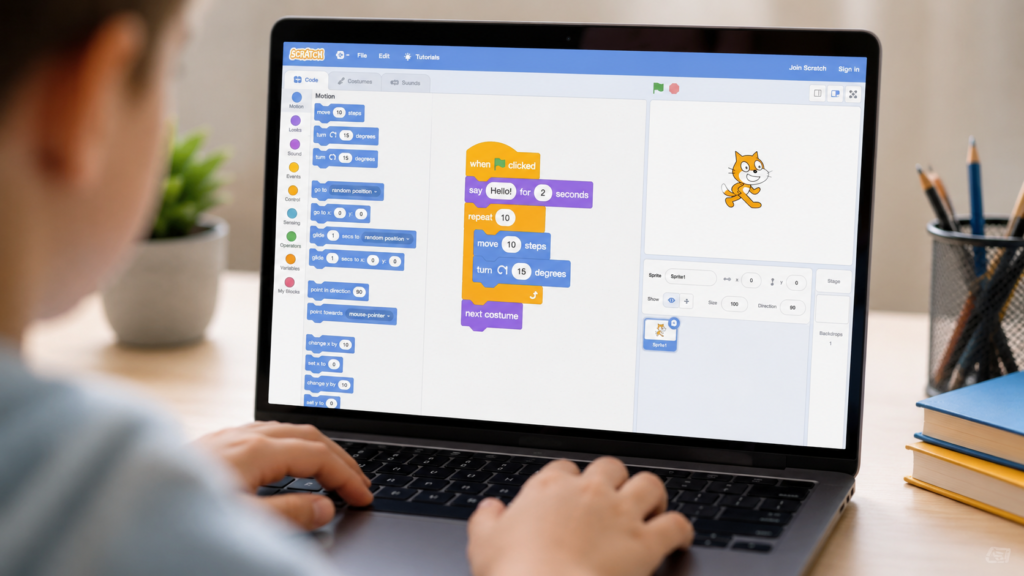
Compile your empty project to ensure the toolchain is functioning correctly. This step catches configuration errors early, before you write any actual logic.
move build
A successful build returns no output or a summary of compiled modules. If you see errors, check your Move CLI version against the requirements for your target chain.
With the environment ready, you can begin writing your first Move module. The language's resource-oriented model ensures that digital assets are handled with strict type safety, reducing the risk of common smart contract bugs.
Write your first resource-based contract
Move’s ownership model treats digital assets as unique resources rather than fungible tokens. This distinction prevents double-spending and ensures that each item exists in exactly one place at a time. To write a move-based programming contract, you must define a resource struct and a function that creates it.
Start by defining a struct that represents your asset. In Move, you must mark the struct with the key and store abilities to allow it to be stored in global storage and moved between accounts. This struct acts as the blueprint for your resource.
module examples::my_resource {
    use std::string;
    use sui::object::{Self, UID};

    struct MyToken has key, store {
        id: UID,
        name: string::String,
    }
}
Next, write a public entry function that constructs the resource. This function takes the transaction signer (who pays for the creation) and the desired parameters for the asset. Inside the function, you initialize the UID and set the field values, then return the new resource object.
    public entry fun mint_token(
        signer: &signer,
        name: String,
    ) {
        // Initialize the object with a new ID
        let my_token = MyToken {
            id: object::new(&mut signer),
            name,
        };

        // Return the object to the caller
        object::transfer(my_token, signer);
    }
}

Move’s compiler enforces that resources cannot be copied or dropped accidentally. When you transfer the MyToken to the signer, the ownership is securely assigned. This explicit transfer mechanism is the core of move-based programming, ensuring that assets are always accounted for and never lost to silent errors.
This pattern scales to complex assets like NFTs or game items. By strictly defining how resources are created and moved, you build contracts that are inherently safer than traditional token models. For a deeper conceptual overview, this video explains the core abstractions of the Move language.
Handle errors and test move logic
Move’s type system prevents many runtime crashes, but logic errors still slip through. A contract might compile cleanly while allowing a user to drain funds or bypass ownership checks. You need to verify that your error handling catches these cases before deployment.

Use the abort function to throw specific errors when preconditions fail. Define custom error codes in a dedicated module to make debugging easier. Instead of generic aborts, use named constants like ErrorInsufficientBalance or ErrorUnauthorized. This makes stack traces readable and helps you pinpoint exactly which rule was broken.
Unit tests should cover both success and failure scenarios. Use the #[test] attribute to mark test functions. Inside these tests, trigger the error conditions you defined. Assert that the transaction reverts with the expected error code. If a test doesn’t fail when it should, the contract is unsafe.
Test every function that modifies state. Ensure that only authorized addresses can call these functions. Check that ownership transfers work correctly and that the previous owner loses access. If access control logic is flawed, attackers can take over the contract.
Use move test to run all unit tests. Ensure 100% pass rate before proceeding. Review the test coverage report to identify untested code paths. If coverage is low, add more tests. A contract with untested paths is a liability.
-
Unit tests pass with 100% coverage
-
Custom error codes defined and tested
-
Ownership rules verified in isolation
-
Access control logic validated
Testing move logic is like stress-testing a bridge. You don’t just check if it holds under normal weight; you check if it collapses under extreme conditions. Move’s error handling ensures that when things go wrong, they go wrong safely.
Deploy and verify your smart contract
Once your Move module passes local testing, the next step is publishing it to the blockchain. This process uploads your compiled bytecode to the network, making your logic live and accessible to other accounts. You will use the Sui CLI to send a transaction that publishes the module under your account address.
After deployment, verification ensures transparency. By submitting your source code to a block explorer, you allow users to read and audit the logic behind the bytecode. This step builds trust and confirms that the on-chain code matches your local repository.
Run sui client publish with the --gas-budget flag set to cover transaction fees. This command compiles your Move sources and broadcasts the publish transaction. Wait for the transaction to commit; the output will provide the module ID, which acts as the unique identifier for your code on-chain.
Navigate to the Sui Explorer and locate your newly published module using the module ID. Select the "Verify" option and paste your original Move source files. The explorer will compile the source against the bytecode to ensure they match. A successful verification badge indicates that the public can now read your code.

Test your deployed module by calling its entry functions from a new account or script. Use sui client call to execute a transaction that triggers your logic. Verify that the state changes as expected in the explorer, confirming that the contract behaves correctly in a live environment.
Move programming questions answered
Developers considering Move in 2026 often ask how it fits into the current AI-driven landscape. The consensus is that Move’s strict correctness model pairs well with AI assistance, shifting the developer’s role from writing boilerplate to orchestrating and validating complex systems.
No comments yet. Be the first to share your thoughts!