
Move-based programming limits to account for
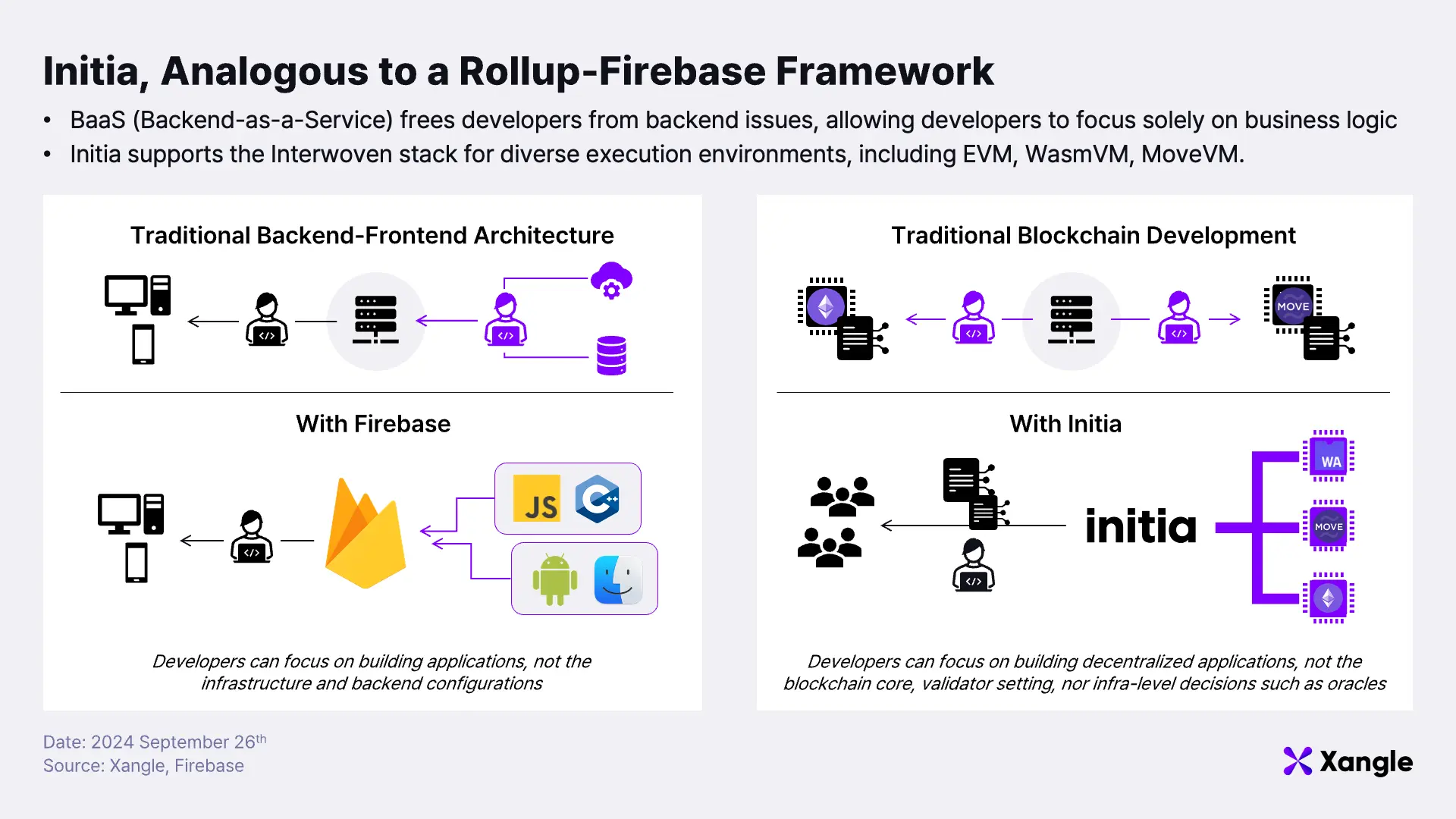
Move-based programming shifts control from declarative state changes to explicit, imperative resource movement. In this model, assets are not copied or passively updated; they are moved from one owner to another with strict verification at every step. This constraint eliminates the double-spend vulnerability that has historically plagued smart contract development, ensuring that digital assets maintain their integrity through their entire lifecycle.
The language is built on Rust, providing developers with familiar memory safety guarantees while enforcing unique ownership rules. Unlike Solidity, where asset management is often implemented at the contract level for most tokens, Move treats resources as first-class citizens. This means an asset cannot be duplicated, ignored, or accidentally destroyed. It must be explicitly moved, consumed, or stored, making the code’s intent unambiguous and significantly reducing the attack surface for common vulnerabilities.
This approach appeals to developers seeking higher security guarantees in high-stakes financial applications. By making the movement of value explicit and mandatory, Move reduces the cognitive load required to audit complex financial logic. The tradeoff is a steeper learning curve for those accustomed to traditional Ethereum-based development, but the resulting code is often more robust and easier to verify formally.
Move-based programming choices that change the plan
Switching from declarative patterns to imperative, move-based control introduces distinct operational realities. Developers must weigh the security guarantees of resource-oriented code against the implementation complexity and gas costs inherent in explicit asset management.
The core tradeoff lies in how ownership is handled. Move enforces linear types, meaning assets cannot be copied or silently discarded. This prevents common vulnerabilities like reentrancy attacks found in Solidity, where state can be manipulated during external calls. However, this safety comes at the cost of stricter development workflows. Every transfer, storage operation, and event emission must be explicitly coded, increasing the line count and cognitive load for complex logic.
| Factor | Move (Imperative) | Solidity (Declarative) | Impact |
|---|---|---|---|
| Asset Integrity | Enforced at language level (linear types) | Managed at contract level (ERC-20/721) | Move prevents duplication bugs; Solidity requires careful auditing |
| Gas Efficiency | Optimized for transaction validation and execution | Higher overhead for state changes and copies | Move often cheaper for high-frequency asset transfers |
| Complexity | Higher learning curve; explicit ownership | Lower barrier to entry; familiar EVM patterns | Move requires more rigorous testing and code review |
| Composability | Rich composability with safe asset handling | Mature ecosystem but prone to signature replay | Move enables safer cross-contract interactions |
For teams building high-throughput decentralized applications, the move-based model offers superior security for asset-heavy logic. The explicit control over resource lifecycles reduces the attack surface significantly. However, for simple token transfers or basic governance mechanisms, the added verbosity of move-based programming may outweigh the benefits, making a declarative approach more efficient for rapid prototyping.
Choose the next step: Turn the research into a practical decision framework
Move is a blockchain programming language built on Rust, designed to enforce strict asset integrity. Unlike Solidity, where tokens are essentially accounting entries managed by a contract, Move treats digital assets as unique resources that can only be moved, never duplicated. This architectural shift reduces a class of bugs that has historically plagued decentralized finance.
To decide if Move fits your project, compare the two languages across three critical dimensions. The following framework helps you weigh security against ecosystem maturity.
| Feature | Move | Solidity |
|---|---|---|
| Asset Model | Resources (move-only, no copy) | Balances (account-based, copyable) |
| Primary Chain | Sui, Aptos | Ethereum, Polygon, Arbitrum |
| Learning Curve | High (Rust-based, strict ownership) | Medium (EVM familiar to many) |
| Ecosystem Size | Growing, specialized | Massive, established |
Step 1: Assess your security requirements
If your protocol handles high-value assets or complex financial logic, Move’s resource model is the safer default. By preventing the accidental duplication of assets at the language level, Move eliminates entire categories of reentrancy and overflow attacks. This is not just a theoretical advantage; it directly reduces the attack surface for auditors and users.
Step 2: Weigh ecosystem liquidity
Solidity dominates Ethereum, the largest smart contract platform by total value locked. Move powers newer chains like Sui and Aptos, which are gaining traction but still have smaller developer pools and liquidity networks. Your choice depends on whether you prioritize immediate access to deep liquidity or are willing to build within an emerging, high-performance ecosystem.

Step 3: Evaluate developer availability
Hiring for Move is more challenging than for Solidity due to the steeper learning curve associated with Rust. However, Move developers often bring stronger systems-level security expertise. Consider whether your team has the capacity to learn a new paradigm or if you need to hire from a broader, more familiar talent pool.
Step 4: Make the final call
Choose Move if security and performance are your primary drivers and you are building on a modern, high-throughput chain. Choose Solidity if you need maximum liquidity, a vast library of existing tools, and access to the broadest possible developer community. There is no universal winner; the right choice depends on your specific risk tolerance and market strategy.
Spotting Weak Move-Based Options and Misleading Claims
As developers shift from declarative patterns to imperative control in Move, the promise of safety can mask significant trade-offs. The language’s resource-oriented model prevents duplication, but it also introduces rigid ownership rules that often lead to bloated codebases when developers misunderstand the underlying mechanics. Many tutorials oversimplify the "move" concept, leading to implementations that are secure in theory but brittle in practice.
A common mistake is treating Move like Solidity. While both are used for smart contracts, Solidity manages asset integrity at the contract level, whereas Move enforces it at the language level. This distinction means that code which works in Ethereum may fail catastrophically in Move if it doesn't strictly adhere to ownership transfer protocols. Developers must verify that their logic explicitly handles resource movement rather than copying, a nuance often glossed over in beginner guides.
When evaluating Move-based frameworks, look for clear separation of concerns between resource definitions and business logic. Avoid projects that hide ownership checks behind complex abstractions, as these often create hidden points of failure. The imperative nature of Move requires explicit control over data flow, and any framework that obscures this control is likely introducing unnecessary complexity without adding real security benefits.
No comments yet. Be the first to share your thoughts!