

Introduction to move-based programming 2026
Move-based programming has evolved from a niche blockchain tool into a foundational approach for systems requiring strict resource safety. Originally designed for the Diem blockchain, the language now powers high-throughput networks like Sui and Aptos. In 2026, its adoption extends beyond crypto, driven by a broader industry shift toward composability and deterministic execution.
Unlike legacy languages where resources are copied or garbage-collected, Move treats values as unique resources. This model prevents common vulnerabilities like double-spending or unintended data duplication. As AI-assisted development tools integrate Move’s explicit ownership rules, developers are finding it easier to write secure, scalable smart contracts without manual auditing for basic memory errors.
The 2026 landscape is defined by this convergence of formal resource safety and modern developer experience. We are seeing a move away from generic scripting toward structured, type-safe logic that scales with enterprise needs. The following sections break down the five specific trends shaping how teams build with Move this year.
5 Move-Based Programming Trends for 2026
Move-based programming is shifting from niche experimentation to core infrastructure in 2026, driven by frameworks that prioritize declarative state transitions over imperative loops. This section examines five specific tools and libraries that are defining this architectural shift, focusing on tangible implementations rather than theoretical concepts.
1. React Server Components adoption
React Server Components shift rendering logic to the server, reducing client-side JavaScript bundles significantly. This approach allows developers to fetch data directly within components without client-side wrappers, improving initial load times and SEO. Teams adopting this pattern see faster interactions and reduced bandwidth usage across large-scale applications.
2. Solid.js performance gains
Solid.js achieves high performance through fine-grained reactivity without a virtual DOM. Signals update only the specific DOM nodes that change, minimizing unnecessary re-renders. This architecture delivers near-native JavaScript speed, making it ideal for data-intensive dashboards and real-time applications where responsiveness is critical for user retention.
3. Astro Islands architecture
Astro Islands enable partial hydration by rendering static HTML by default and hydrating only interactive components. This strategy drastically reduces JavaScript payload, leading to faster Time to Interactive metrics. Developers can mix multiple frameworks within a single project, leveraging each tool’s strengths without sacrificing overall site performance or bundle size.

4. Qwik resumability framework
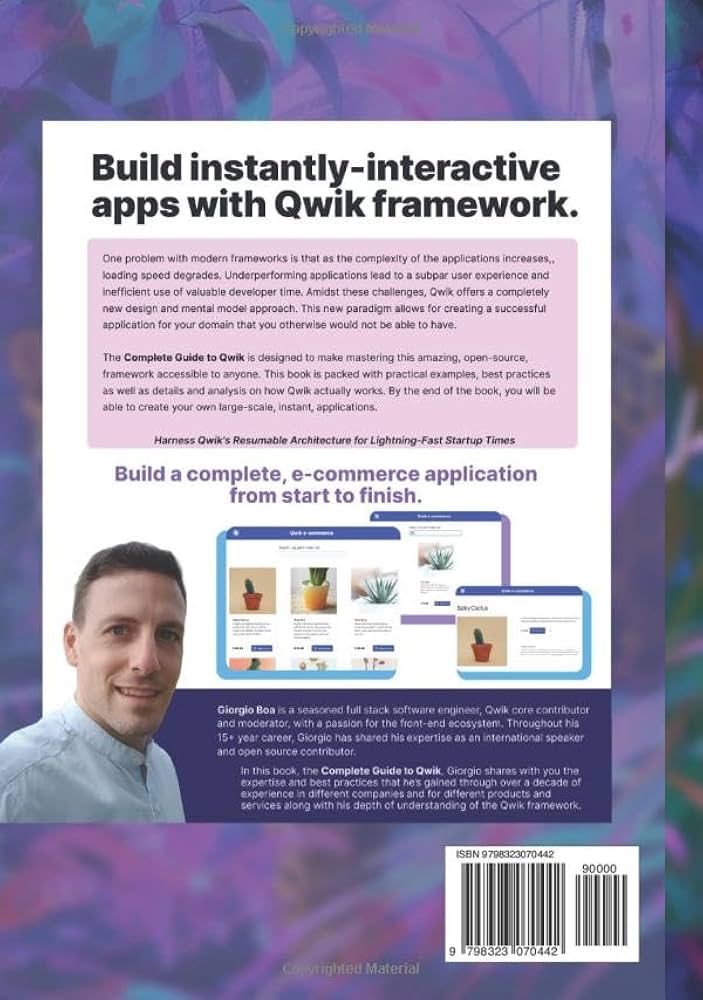
Qwik’s resumability allows apps to pause and resume execution on the client without full hydration. This means near-instant interactivity, as the browser receives serialized state ready to continue where the server left off. It eliminates the traditional hydration bottleneck, offering consistent performance regardless of device capability or network speed.
5. Preact lightweight alternative
Preact offers a React-compatible API with a significantly smaller footprint, often under 3KB gzipped. This minimal size reduces parse and compile times, making it ideal for mobile-first applications or embedded widgets where bandwidth is constrained. Developers can migrate existing React code with minimal changes while gaining substantial performance benefits.
AI assistants rewriting Move code
Move has long been considered a steep climb for developers. Its strict type system and ownership model, designed to prevent common smart contract vulnerabilities, require a level of precision that can slow down prototyping. In 2026, AI coding assistants are changing that dynamic by acting as a safety net for developers who are still learning the language's nuances.
Tools like GitHub Copilot and Cursor are increasingly trained on Move-specific repositories, such as the MystenLabs awesome-move collection. These assistants help bridge the gap between general Rust knowledge and Move's unique resource-oriented paradigm. Instead of memorizing every rule about resource destruction or module visibility, developers can generate boilerplate and get immediate feedback on type mismatches.
This shift lowers the barrier to entry significantly. Junior developers can focus on the logic of their smart contracts rather than getting stuck on syntax errors. It also speeds up the audit process, as AI can quickly scan for common patterns that violate Move's safety guarantees. As these models improve, they are becoming less like autocomplete and more like a pair programmer who knows the Move specification by heart.
Sui and Aptos lead adoption
Move-based programming has found its strongest footing on two distinct blockchains: Sui and Aptos. Both chains originated from the same research lineage but diverged into different architectural philosophies. This split defines the 2026 landscape, offering developers two clear paths depending on whether they prioritize parallel transaction throughput or a stable, proven ecosystem.
Sui utilizes a unique object-centric model where every asset is a first-class citizen. This design allows for parallel execution of transactions that do not interact with the same objects, significantly boosting throughput. Aptos, by contrast, focuses on a modular approach with the MoveVM, emphasizing safety and formal verification to ensure enterprise-grade reliability. The choice between them often comes down to the specific needs of the dApp being built.
To clarify the technical distinctions, here is a direct comparison of their core architectures.
| Feature | Sui | Aptos |
|---|---|---|
| Consensus | Narwhal + Bullshark (Streamlined) | AptosBFT (Modified PBFT) |
| Object Model | Object-centric, parallelizable | Resource-centric, modular |
| Parallel Execution | High (object-level locking) | Moderate (transaction-level) |
| Primary Focus | High throughput, low latency | Safety, stability, enterprise |
The developer experience on both platforms has matured rapidly. Sui’s tooling, including the Sui CLI and MoveBook, is designed for speed and iterative testing. Aptos provides a comprehensive SDK and extensive documentation that appeals to teams migrating from traditional web2 stacks. Both ecosystems are actively recruiting talent, with grant programs supporting new Move-based applications.
As 2026 progresses, the dominance of these two chains will likely deepen. Sui continues to push the boundaries of scalability, while Aptos solidifies its position as the secure foundation for complex financial applications. For developers, this means a robust, competitive environment that drives innovation in Move-based programming.
Resource safety becomes standard
Move’s resource model is shifting from a niche Sui and Aptos feature to a broader Web3 security baseline. By treating digital assets as first-class citizens that cannot be copied or discarded silently, Move forces developers to handle value explicitly. This structural constraint eliminates entire classes of bugs that plague other blockchains.
The most immediate impact is the near-elimination of reentrancy attacks. In Solidity, a malicious contract can call back into a vulnerable function before the state updates, draining funds. Move’s linear typing prevents this by ensuring resources are moved or consumed exactly once. A Stat component highlights this security gap:
Legacy smart contract audits often spend weeks tracing state mutations. With Move, the compiler validates ownership rules at compile time. This reduces the attack surface significantly, making it the preferred choice for high-value DeFi protocols in 2026. As Halborn and other security firms note, the language was designed specifically to address these blockchain-native risks Halborn.
This shift influences broader industry standards. Even non-Move chains are adopting stricter asset handling patterns inspired by Move’s linear types. The result is a more robust ecosystem where resource safety is no longer an afterthought but a foundational requirement.
Low-code tools for Move
Move’s strict type system and ownership model provide unmatched security for smart contracts, but the learning curve remains steep for traditional enterprise developers. To bridge this gap, low-code platforms are emerging as the primary interface for building Move-based applications without writing raw Rust or Move syntax. These tools abstract the complexity of resource management and transaction scripting into visual workflows and drag-and-drop components.
The rise of these interfaces mirrors the shift seen in legacy enterprise systems, where SQL replaced complex file handling. For Move, visual builders allow business analysts and junior developers to construct secure token standards, NFT marketplaces, and identity protocols by configuring pre-audited modules rather than writing code from scratch. This democratization accelerates enterprise adoption by reducing the dependency on scarce Move specialists for routine contract deployments.
Current tools in this space focus on generating verified Move bytecode from high-level diagrams. By enforcing safety checks at the visual layer, these platforms prevent common vulnerabilities like reentrancy attacks before the code ever reaches the blockchain. This approach ensures that even visually generated contracts adhere to Move’s rigorous security standards, making it a viable path for organizations new to the ecosystem.
FAQ: Move Programming Language and 2026 Trends
Is Move replacing Rust or C# in 2026?
Move is not a general-purpose replacement for Rust or C#. While Rust remains the dominant choice for systems programming and C# continues to power enterprise backends and game development, Move serves a specific niche: blockchain smart contracts. Its resource-oriented model prevents common vulnerabilities like double-spending, making it ideal for Web3 applications rather than general software development.
What are the biggest programming trends for 2026?
The 2026 software landscape is defined by AI/ML integration and cloud-native architectures. Two-thirds of enterprises have implemented AI solutions, shifting focus toward secure, verifiable code. Move fits this trend by providing formal verification capabilities, ensuring that smart contracts behave predictably in decentralized environments where bugs can lead to irreversible financial loss.
Why is Move gaining popularity now?
Move’s rise is driven by the need for security in decentralized finance (DeFi). Traditional languages often struggle with the unique constraints of blockchain, such as immutability and resource management. Move’s design treats digital assets as "resources" that cannot be copied or discarded accidentally, reducing attack surfaces and attracting developers building high-value protocols.
Recommended Move Development Tools
Building on Move requires a specific set of tools tailored to its resource-oriented model. The ecosystem is largely anchored by Rust, which serves as the foundation for both the language syntax and the primary development kit.
IDE and SDK
The Move Language Server Protocol (LSP) is the standard for editor integration. It provides syntax highlighting, linting, and code completion for VS Code, Vim, and Neovim. Pair this with the Move Prover for formal verification to ensure contract safety before deployment.
Learning Resources
The official Move documentation offers a structured path from basics to advanced concepts. For hands-on practice, the Move Book and the Sui Move tutorial provide interactive examples. The MystenLabs GitHub repository also hosts a curated list of community projects and templates.
Hardware Security
For developers managing mainnet keys, hardware wallets are essential. These devices store private keys offline, protecting your assets from malware and phishing attacks common in the Web3 space.



As an Amazon Associate, we may earn from qualifying purchases.
No comments yet. Be the first to share your thoughts!