
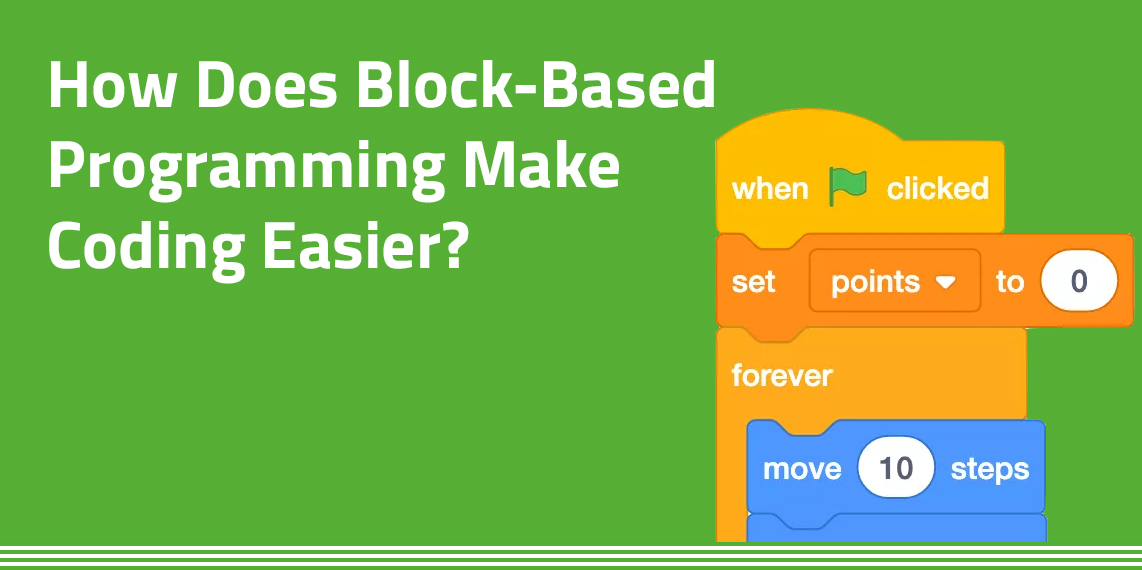
What defines move-based programming
Move-based programming is a resource-oriented language designed specifically for safety in smart contract environments. Unlike legacy account-based models that rely on external checks and balances, Move treats digital assets as first-class citizens with strict lifecycle rules. This architectural shift prevents common vulnerabilities like double-spending and unauthorized transfers at the language level, rather than relying on developer diligence alone.
The language was originally developed by Meta for the Libra (later Diem) stablecoin project before being open-sourced. Its core innovation is the concept of "resources," which are unique data types that cannot be copied, dropped, or implicitly discarded. This ensures that every token or NFT has a verifiable path from creation to final ownership, providing a higher degree of security assurance than traditional EVM-compatible languages.
This approach contrasts sharply with Solidity, where asset management is often handled through separate functions and storage slots. In Move, the logic governing an asset is intrinsically linked to the asset itself. This tight coupling reduces the attack surface for smart contracts, making it particularly valuable for high-stakes financial applications where a single bug can result in significant loss of capital.
By enforcing these strict rules, Move-based programming offers a more predictable and secure foundation for decentralized finance. Developers can build complex composability features without the constant fear of underlying asset integrity being compromised by simple coding errors or malicious exploits.
Move versus Solidity and Rust
Move, Solidity, and Rust represent three distinct approaches to smart contract development, each with specific trade-offs in security, composability, and ecosystem maturity. While Solidity dominates Ethereum through sheer network effects, Move introduces a resource-oriented model designed to prevent common vulnerabilities at the language level. Rust offers unmatched performance and systems-level control but requires rigorous manual auditing to ensure safety in high-stakes financial applications.
The following comparison highlights the structural differences that influence developer choice and contract reliability.
| Feature | Move | Solidity | Rust |
|---|---|---|---|
| Resource Model | Explicit ownership; resources cannot be copied or dropped. | Value types only; no native resource safety. | Ownership and borrowing; manual memory management. |
| Composability | Modules are reusable; promotes efficient development. | High; mature ecosystem of libraries and standards. | Limited; no standard smart contract interface. |
| Security Model | Compiler-enforced safety; prevents reentrancy and overflow. | Runtime checks; vulnerable to reentrancy and overflow. | Undefined behavior possible; requires extensive auditing. |
| Ecosystem Maturity | Emerging; growing on Sui and Aptos. | Dominant; largest DeFi and NFT ecosystem. | Niche; limited to Substrate-based chains. |
Security and Composability Trade-offs
Move’s primary advantage lies in its resource model, which treats digital assets as unique items that cannot be duplicated or discarded accidentally. This design eliminates entire classes of bugs, such as reentrancy attacks and integer overflows, which have historically plagued Solidity contracts. For developers building high-value financial instruments, this compiler-enforced safety reduces the need for extensive post-deployment auditing, though it requires a shift in programming mindset.
Solidity remains the default choice for projects prioritizing immediate liquidity and user base access. Its composability is unmatched, allowing developers to plug into existing DeFi protocols with minimal friction. However, this convenience comes at the cost of security; developers must manually implement safety checks and rely on external audits to mitigate risks inherent in the language’s design.
Rust provides the highest performance and flexibility, making it suitable for complex, high-throughput applications. Yet, its lack of a standardized smart contract interface and reliance on manual memory management make it less accessible for rapid deployment. It is best suited for infrastructure layers or specialized chains where performance is critical and security can be rigorously validated.
Market Context
The choice between these languages often reflects broader market trends. As capital flows into newer Move-based chains like Sui and Aptos, the ecosystem is maturing rapidly, offering developers alternatives to Ethereum’s congestion and high fees. Understanding these trade-offs is essential for projects evaluating long-term viability and security posture.
Core Advantages of Move-Based Programming
Move-based programming has shifted from a niche academic exercise to the primary architecture for high-stakes smart contracts in 2026. The language’s design prioritizes resource safety and composability, solving critical scalability bottlenecks that plagued earlier blockchain generations. By treating digital assets as first-class citizens rather than simple account balances, Move enables developers to build complex, interdependent financial instruments without the fear of common vulnerabilities like reentrancy attacks.
Programmable Transaction Blocks (PTBs)
Programmable Transaction Blocks (PTBs) represent the fundamental shift in how transactions are structured on Move-based chains. Unlike traditional blockchains that execute a single function call per transaction, PTBs allow developers to bundle multiple operations into one atomic unit. This means a user can swap tokens, stake assets, and update metadata in a single, indivisible step. If any part of the sequence fails, the entire block reverts, ensuring state consistency. This atomicity reduces gas costs and improves user experience by eliminating the need for multiple confirmations.
The Object Data Model
The Object Data Model (ODM) redefines how data is stored and accessed. In Move, every asset is an object with a unique identifier, enabling fine-grained access control and parallel execution. Instead of locking entire accounts during transactions, the blockchain can process operations on different objects simultaneously. This parallelism is essential for handling high-throughput applications like decentralized exchanges or gaming platforms. The ODM also simplifies composability; objects can be easily passed between functions and contracts, creating a modular ecosystem where developers can build upon existing components without forking code.
Resource-Oriented Safety
Move’s resource-oriented type system ensures that digital assets cannot be copied or discarded accidentally. This "linear typing" guarantees that every token or NFT has exactly one owner at any given time. For financial applications, this eliminates entire classes of bugs related to double-spending or unauthorized transfers. The language’s strong typing and formal verification capabilities provide a higher level of security assurance, making it the preferred choice for institutions managing significant capital.
Choosing the right chain for move
Selecting the appropriate Move-based blockchain requires aligning your application’s architectural needs with the underlying consensus mechanism and asset model. While Move serves as the common language, the execution environments differ significantly in how they handle parallelism, resource ownership, and economic incentives. For developers targeting high-throughput consumer applications or complex DeFi primitives, the choice between Sui and other Move ecosystems dictates performance ceilings and developer experience.
Sui has emerged as the primary alternative to the Move foundation’s own Aptos, leveraging an object-centric data model that allows for unprecedented parallel transaction processing. This architecture enables Sui to handle thousands of transactions per second without the sharding complexities seen in other Layer 1s. The chain’s native token, SUI, reflects this economic activity, currently trading with significant volatility as the ecosystem matures.
When evaluating Sui against competitors, consider the specific use case. Sui’s object model is particularly advantageous for gaming, NFT marketplaces, and applications requiring frequent state updates, as it minimizes contention between transactions. In contrast, other Move-based chains may offer different trade-offs in terms of finality speed or developer tooling maturity. The decision ultimately hinges on whether your project prioritizes maximum parallelism and object-oriented composability or prefers a more traditional account-based model with established but potentially lower throughput limits.
Frequently asked questions about move
What programming language is move based on?
Move is a Rust-based language. This foundation gives it strong type safety and memory safety from the start, which is essential for building secure smart contracts. While it shares the blockchain use case with Solidity, its Rust roots provide a different set of tools for handling digital assets safely across multiple platforms.
Is move a blockchain programming language?
Yes. Move is designed specifically for constructing secure and adaptable smart contracts. It acts as a platform-agnostic language, meaning it can run on different blockchains rather than being locked to just one. This makes it a versatile choice for developers who need to deploy assets across various ecosystems.
How does move differ from solidity?
The main difference lies in their design goals. Solidity is optimized for Ethereum's virtual machine, while Move was created with a focus on asset security and resource management. Move treats digital assets as first-class citizens that cannot be copied or discarded accidentally, offering a higher level of safety for high-stakes financial transactions.
No comments yet. Be the first to share your thoughts!