
Move-Based Programming Budget
When building a Move-based development stack, your budget depends on hardware, education, and tooling rather than licensing fees. The Move language is open source, so there is no upfront cost to learn or deploy smart contracts on networks like Sui or Aptos. The real expense lies in the developer time required to master its asset-oriented model.
For individuals starting out, the budget is near zero. You can run local Move toolchains on standard laptops without specialized GPUs. The primary investment is time spent learning resource safety and module composition. If you are a solo developer, you likely only need to budget for a domain name and a wallet for testnet transactions, which are negligible.
Teams building production-grade Move applications should budget for cloud infrastructure and auditing. While coding is free, securing Move code is not. Smart contract audits on Move-based chains are critical due to the language’s strict resource handling. Expect to allocate funds for professional security reviews, which can range from a few thousand to tens of thousands of dollars depending on complexity. Additionally, enterprise teams may need dedicated DevOps resources to manage node infrastructure for high-throughput Move applications.
Compare the top move-based programming options
Move-based programming languages are shifting from niche blockchain experiments to primary tools for high-throughput smart contracts. The landscape is dominated by two main dialects: Move (used by Aptos) and Sui Move (used by Sui). Both share a common ancestry but diverge in architecture, targeting different developer needs for asset management and parallel execution.
Choosing between them depends on your deployment target and performance requirements. Aptos prioritizes stability and a mature ecosystem for general-purpose dApps, while Sui focuses on object-centric models for ultra-low latency transactions. Below is a direct comparison of their core features to help you select the right fit for your 2026 roadmap.
| Feature | Aptos Move | Sui Move | Shared Base |
|---|---|---|---|
| Primary Chain | Aptos Network | Sui Network | Both derived from Diem/MovE |
| Execution Model | Parallel Execution via Block-STM | Parallel Execution via Object Model | Maximizes throughput |
| Asset Handling | Resources and Modules | Objects with unique IDs | Strong typing guarantees |
| Learning Curve | Moderate (C-like syntax) | Steep (Ownership concepts) | Requires Rust-like mindset |
| Ecosystem Maturity | High (Established dApps) | High (Fast-growing DeFi) | Active open-source communities |
The decision often comes down to whether you need the proven stability of Aptos or the object-oriented flexibility of Sui. If your application requires complex, nested asset structures that change frequently, Sui’s object model offers a distinct advantage. For standard token transfers and governance modules, Aptos provides a more traditional, resource-based approach that many developers find easier to audit.
Both platforms support Move Prover, a formal verification tool that allows you to mathematically prove the safety of your smart contracts. This is a critical feature for financial applications where bugs can be catastrophic. Whether you choose Aptos or Sui, the emphasis on safety over speed remains the defining characteristic of move-based programming.
Inspect the expensive parts
Move-based languages like Sui and Aptos prioritize asset safety through resource-oriented programming, but implementation errors still carry high costs. Because Move enforces strict ownership and linear typing, bugs rarely manifest as simple data leaks; instead, they often appear as complex logic failures in cross-chain bridges or validator consensus layers. A practical inspection checklist focuses on these high-risk areas to prevent expensive exploits.

Verify that all assets are treated as resources rather than plain data. Check that every transfer function explicitly moves ownership and that no code path allows an asset to be duplicated or lost. Look for "burn" functions that properly remove resources from circulation, ensuring no orphaned tokens remain in contract storage.
Move’s security model relies on linear types, meaning values must be used exactly once. Inspect the code to ensure no implicit copying occurs in complex structs. If a struct contains a resource, it must be moved as a whole; partial moves or implicit copies will cause compile-time errors, but misinterpretation of these rules can lead to logical deadlocks in production.
Bridges are the most vulnerable points in Move-based ecosystems. Inspect the verification logic for incoming and outgoing transactions. Ensure that the bridge contract strictly validates signatures from the source chain and that it holds sufficient escrowed assets. Look for reentrancy-like vulnerabilities where a single transaction could trigger multiple state changes.

Move-based blockchains often use novel consensus mechanisms. Inspect the governance parameters to ensure no single entity can control the network. Check for upgradeability features in smart contracts; ensure that admin keys are multisig or time-locked to prevent sudden, malicious changes to the protocol logic.
Plan for ownership costs
A cheap license or low entry price rarely tells the whole story. The true cost of AI-driven move-based programming comes from the hidden friction of maintenance, integration, and scaling. When you buy into a Move-based ecosystem, you are buying into a specialized stack that demands specific expertise and tooling. If your team lacks native Move developers, the cost of training or hiring can quickly eclipse the initial software savings.
Maintenance surprises often appear in the form of dependency management and security audits. Move’s asset-centric design requires rigorous testing to prevent value loss, which means more time spent on formal verification and less on feature development. Additionally, the ecosystem is still maturing; libraries that seem stable today may undergo breaking changes as the language evolves, forcing you to rewrite modules rather than simply updating versions.
Consider the total cost of ownership over three years. You must budget for specialized IDE extensions, security audit fees, and potential consultant hours for complex contract interactions. A low-cost solution that lacks robust community support or documentation will force your team to build internal tools from scratch, turning a budget purchase into a resource drain.
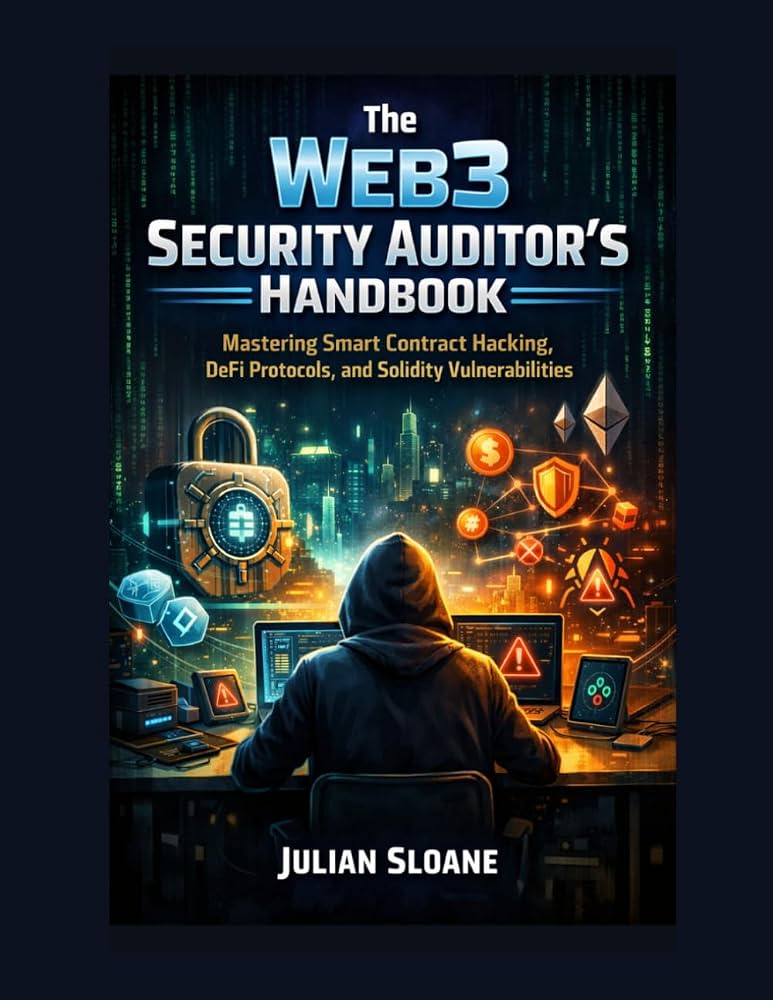


As an Amazon Associate, we may earn from qualifying purchases.
When a cheap buy stops being cheap, it is usually because the hidden costs of expertise and security outweigh the upfront savings. Evaluate whether your current team can handle the Move stack’s unique requirements before committing to a low-cost entry point.
Move-based programming: what to check next
Before committing to AI-driven move-based programming, it helps to clear up common confusions about the language itself and its place in the broader ecosystem. These questions often come up when developers compare Move to more traditional languages or try to understand its specific niche.
No comments yet. Be the first to share your thoughts!